
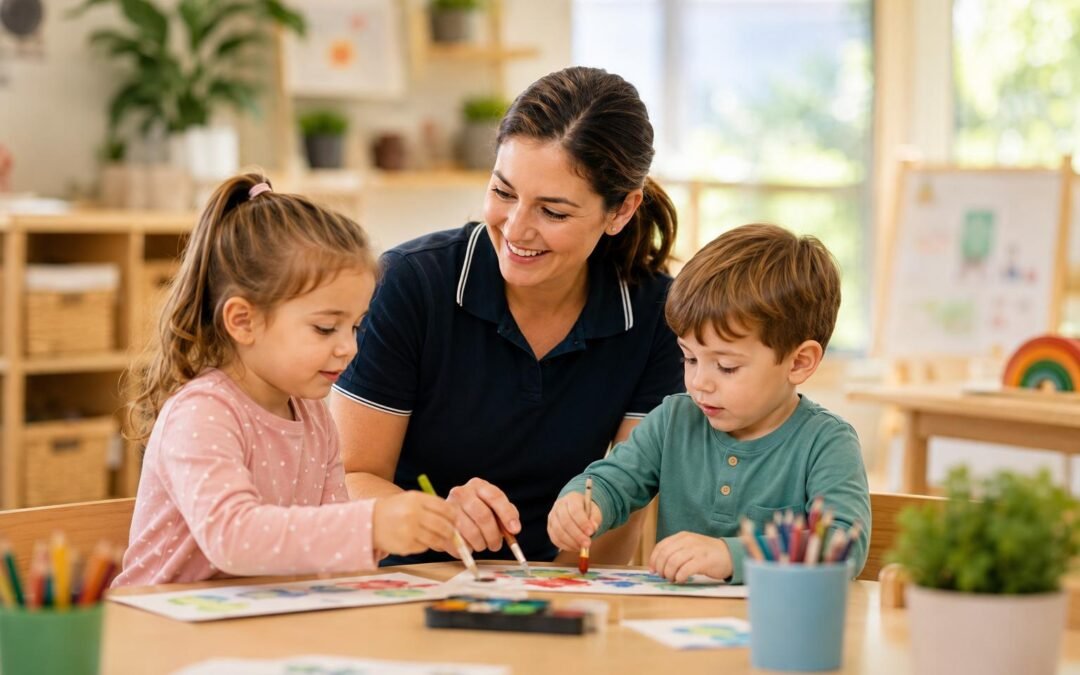
Your child’s first experiences with other children can bring excitement, hesitation, funny conversations, and plenty of small moments that you may remember for years. A Childcare Waitlist in Eastwood NSW can give you time to think about the kind of environment where your child can begin making friends, asking questions, and celebrating those everyday little wins.
Why Can Early Friendships Matter to Your Child?
You may notice that your child already has a strong idea of how they want to play. One day, your child might want someone to join a pretend kitchen game. Another day, your child may prefer building alone before feeling ready to invite someone over.
These early interactions can help your child practise important social skills in real situations.
Your child can learn how to ask for a turn, listen to another child’s idea, share materials, or say that they do not like something. You may even hear your child ask, “Can I play too?” after initially watching from the side.
Those moments may look small, but they can be meaningful steps in your child’s social development.
How Can a Childcare Setting Make Friendships Feel Natural?
Your Child Can Meet Others Through Shared Interests
Your child does not have to become friends with everyone immediately.
A shared activity can provide an easier starting point. Your child might build beside another child in the construction area, look through the same book, create artwork at the table, or join an outdoor game.
Eastwood Blessings provides purposeful areas including construction, creativity and art, numeracy, nature, puzzles, books, home play, and outdoor activities.
When your child finds an activity they enjoy, starting a conversation can feel much easier.
Your Child Can Learn From Everyday Interactions
Friendship does not only happen during organised group activities.
Your child can practise social skills while waiting for lunch, putting resources away, choosing an activity, moving between spaces, or talking about something that happened during the morning.
You may see your child first watch another child play, then move closer, then eventually take part. Giving your child time to become comfortable can make those first connections feel less pressured.
What About Your Child’s Questions?
Your child’s questions can appear at the most unexpected times.
“Why is that leaf brown?”
“How did you make that?”
“Where does the water go?”
“Can I try?”
These questions can become starting points for learning when your child has time to investigate and talk about what they notice.
Eastwood Blessings uses play-based learning alongside hands-on experiences, STEAM education, cooking, sustainability activities, and other learning opportunities.
Your Child Can Learn by Trying an Idea
Suppose your child wants to build a tall structure.
Your child may place several blocks together, watch them fall, change the base, and try again. You may hear your child explain why the second attempt worked better.
That one activity can involve counting, balance, problem-solving, language, patience, and creativity without feeling like a formal lesson.
How Can Little Wins Build Your Child’s Confidence?
Your child’s progress may not always look dramatic.
A little win could be your child putting their belongings away without being reminded. It could be your child joining a group for the first time, asking an educator for help, trying a new food, or speaking to another child.
At Eastwood Blessings, the learning approach includes tailored programs that support each child’s individual journey. The centre also focuses on identity, community, wellbeing, learning, and communication through the Early Years Learning Framework.
This gives you a broader perspective on progress. Your child does not need to master something overnight. You can notice the small steps that show growing confidence and independence.
Why Can a Smaller Setting Feel More Personal?
You may want your child to feel known rather than simply becoming another face in a busy room.
For your child, that can create more opportunities for educators to notice what they enjoy, where they need support, and how they respond to different experiences.
You may also find it easier to share observations from home and talk about changes you are noticing in your child.
How Can Outdoor Time Create More Opportunities?
Your child may communicate differently when they are running, climbing, collecting natural materials, or playing outside.
A large outdoor space can give your child room for physical activity, imaginative play, social interaction, and curiosity about nature. Eastwood Blessings includes a large outdoor area as part of its learning environment.
Your child might create a game with friends, investigate something they find outside, or simply enjoy having room to move.
Sometimes, a friendship can begin with something as simple as chasing bubbles together.
How Can You Prepare Your Child Before Starting?
You can make the transition easier by talking about childcare in familiar language.
You might talk about meeting educators, playing with other children, eating meals, reading books, or spending time outside.
You can also practise simple routines at home, such as packing a bag, putting belongings away, washing hands, and choosing between two activities.
Most importantly, you can listen to your child’s questions. If your child feels nervous, you do not have to dismiss that feeling. You can acknowledge it and talk through what the first few days might look like.
What Can You Look For When Joining a Waitlist?
You can use the waiting period to think about what matters most to your child.
You might consider:
- How your child responds to new people
- Whether your child prefers quiet or active experiences
- Which activities hold their attention
- How much outdoor time matters to them
- Whether your child needs extra encouragement with social interactions
- How you want educators to communicate with you
- Which learning experiences match your child’s interests
Eastwood Blessings offers a free waitlist, while casual enrolments are also available subject to availability.
Frequently Asked Questions
1. Why can friendships be important during your child’s early years?
Your child can practise communication, cooperation, patience, sharing, and problem-solving through everyday interactions with other children.
2. What if your child is shy around other children?
You can give your child time to watch, become familiar with the environment, and join activities when they feel ready. A calm approach can help your child participate without feeling rushed.
3. Can your child’s questions support learning?
Yes. Your child’s questions can lead to conversations, experiments, stories, investigations, and hands-on activities connected to their interests.
4. What counts as a little win for your child?
A little win might include greeting an educator, joining a game, asking for help, trying something new, sharing an idea, or completing a task independently.
5. How can you help your child prepare for childcare?
You can talk about the daily routine, practise simple self-help tasks, read stories together, and give your child opportunities to make small choices.
6. What can you consider before joining a waitlist?
You can think about your child’s interests, temperament, daily routine, learning preferences, social needs, outdoor interests, and the type of communication you want with educators.
7. How can you support your child’s friendships at home?
You can talk about other children, practise taking turns through games, encourage your child to use words when they need something, and talk about how different people may have different ideas.
