
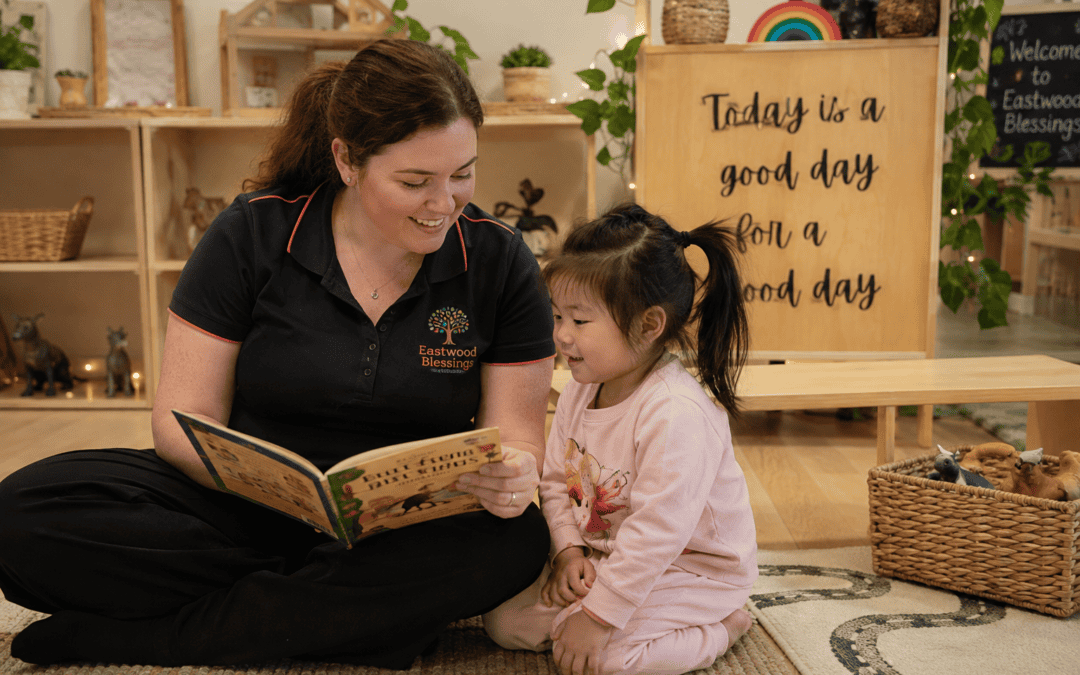
Moving from the comfort of home into a new daily routine can be a big step for your child. Choosing Long Day Care in Eastwood with a warm, familiar, and child-focused approach can make those first experiences feel less overwhelming and help your child gradually become comfortable with their new surroundings.
A Familiar and Welcoming Environment Can Make a Difference
Your child may be used to seeing familiar faces, following familiar routines, and having plenty of reassurance throughout the day. Moving into care introduces new educators, new children, different spaces, and a new daily rhythm.
That is why the environment matters.
A setting that feels warm and welcoming can help your child settle more naturally. When your child can see friendly educators, inviting play spaces, and familiar routines each day, the new environment can gradually start to feel less unfamiliar.
At Eastwood Blessings Early Learning and Preschool, the focus is on creating a nurturing community where your child can feel safe, supported, and comfortable while developing at their own pace.
A Smaller Setting Can Help Your Child Feel Known
Your child may find it easier to settle when they are not simply another face in a large group.
With a capacity of only 21 children per day, Eastwood Blessings provides a boutique setting where educators can give close attention to individual children. This smaller environment can help your child become familiar with the people around them and build trusting relationships over time.
For your child, knowing that an educator remembers their favourite activity, understands when they need reassurance, or notices when they are having a difficult morning can make a meaningful difference.
The transition becomes less about adapting to a large unfamiliar environment and more about gradually becoming part of a small community.
Consistent Relationships Help Build Security
Your child may initially look for the person who makes them feel safe.
When your child sees familiar educators regularly, those relationships can become an important part of the daily routine. Over time, your child can begin to recognise who will greet them, who will help them during activities, and who will be there when they need comfort.
You can support this process by telling educators about your child’s personality and routines.
You might explain how your child usually settles after waking, what activities they enjoy, what makes them nervous, or what helps them feel calm. These little details can help educators understand your child beyond what they see during the first few days.
Eastwood Blessings places strong importance on family and aims to create a centre that feels connected to home. That family-focused approach can help you and your child feel more comfortable during this important change.
Familiar Routines Can Help Your Child Know What Comes Next
Children often feel more comfortable when they know what is going to happen.
At home, your child may already understand the pattern of breakfast, play, lunch, rest, and family time. Starting care means learning a new version of that rhythm.
You can make this easier by talking about the day in simple terms.
You can tell your child that you will arrive together, say goodbye, spend the day playing and learning, have meals and rest time, and then you will return.
You do not need to explain every detail. Repeating a simple routine can help your child gradually understand that being at care is temporary and that you will return.
As the days become familiar, your child can begin to recognise the rhythm without needing constant reassurance.
Play Can Give Your Child a Natural Way to Settle
Your child does not have to sit down and immediately feel comfortable in a new environment.
Play can provide a much easier starting point.
Your child may feel drawn towards building blocks, drawing, books, pretend play, outdoor activities, or another familiar interest. Having something enjoyable to focus on can help your child move their attention away from the uncertainty of saying goodbye.
This gives your child different ways to participate according to their interests and mood.
Outdoor Experiences Can Make the Day Feel More Relaxed
A child who feels unsettled indoors may respond differently when given space to move and play outdoors.
Outdoor play can give your child opportunities to run, create, investigate, interact with other children, and simply enjoy being active.
Eastwood Blessings has a large outdoor play space where your child can take part in active and creative experiences. Outdoor learning is also a natural part of the wider program.
For your child, having access to different environments throughout the day can prevent the experience from feeling repetitive and give them more opportunities to find something that feels enjoyable.
Your Child Can Take Time to Build Confidence
You may hope your child will walk into care happily from the very first day.
Sometimes that happens.
Sometimes your child needs more time.
Your child may cry at drop-off, stay close to an educator, or spend the first few days quietly observing other children. These reactions can be part of adjusting to something new.
You can help by staying calm and keeping your goodbye routine consistent.
A simple hug, a reassuring sentence, and a clear goodbye can be easier for your child to understand than a long departure.
You can also avoid promising that your child will not feel upset. Instead, you can reassure them that their feelings are okay and that you will return after their day.
Family Communication Can Make the Transition Easier for You Too
Starting care is not only a change for your child.
You may also feel worried about whether your child has eaten, slept, played, or settled after you leave.
Open communication with educators can give you a clearer picture of how your child is adjusting.
You can share what you notice at home, while educators can tell you what they observe during the day. Together, you can begin to notice patterns.
Perhaps your child settles quickly after you leave. Perhaps they become interested in outdoor play. Perhaps they need extra time before joining group activities.
These observations can help you understand your child’s experience rather than judging the first few days by the morning drop-off alone.
A Home-Like Approach Can Help Your Child Feel More Comfortable
For your child, the biggest difference between home and care is often the people and surroundings.
A centre that values warmth, relationships, family connection, and individual attention can make the change feel less abrupt.
Eastwood Blessings was founded with the idea of creating a centre that feels like an extension of home, where families feel supported, and children feel safe, confident, and cared for.
That philosophy can be especially meaningful when your child is taking those first steps away from the familiar comfort of home.
How Can You Help Your Child Feel Ready Before Starting Care?
You can make the first few weeks easier by preparing your child gradually.
Talk positively about the new experience without making unrealistic promises. Visit the setting if possible. Let your child become familiar with the educators and spaces. Talk about the daily routine. Keep mornings calm and predictable.
You can also give your child something familiar to look forward to.
If your child loves painting, talk about creative activities. If your child enjoys being outdoors, mention outdoor play. If your child loves asking questions, talk about the new things they may get to learn.
The aim is not to make your child feel that every day will be perfect. The aim is to help your child understand that this new place can become another safe and enjoyable part of their routine.
FAQs
1. How can you make your child’s first days at long day care easier?
You can keep home routines predictable, talk positively about the new experience, introduce your child to educators beforehand, and maintain a calm and consistent goodbye routine.
2. Is it normal for your child to cry when you leave?
Yes. Your child may feel upset because saying goodbye is unfamiliar. With consistent routines, reassurance, and supportive educators, your child can gradually become more comfortable.
3. How can educators help your child settle?
Familiar relationships, patient support, play-based experiences, and attention to your child’s individual needs can help your child gradually become comfortable with the new routine.
4. Why can a smaller setting help during the transition?
A smaller setting can make it easier for your child to become familiar with educators, other children, and the environment. It can also allow educators to pay closer attention to individual needs.
5. What can you tell educators about your child?
You can share your child’s routines, interests, personality, comfort needs, communication style, and anything that usually helps them settle when they feel unsure.
6. How long does it take for your child to feel comfortable?
There is no fixed timeframe. Your child may settle quickly, while another child may need more time. You can give your child patience and communicate regularly with educators throughout the process.
7. Can play help your child adjust to care?
Yes. Familiar and enjoyable play can give your child something positive to focus on while they become comfortable with new people and surroundings.
Your child’s transition into care does not need to happen overnight. With familiar routines, caring relationships, a welcoming environment, and time to adjust, your child can gradually begin to see their new setting as a place where they belong. Eastwood Blessings Early Learning and Preschool provides a small, family-focused environment where your child can receive individual attention while enjoying meaningful play, learning, outdoor experiences, and supportive relationships each day.
