
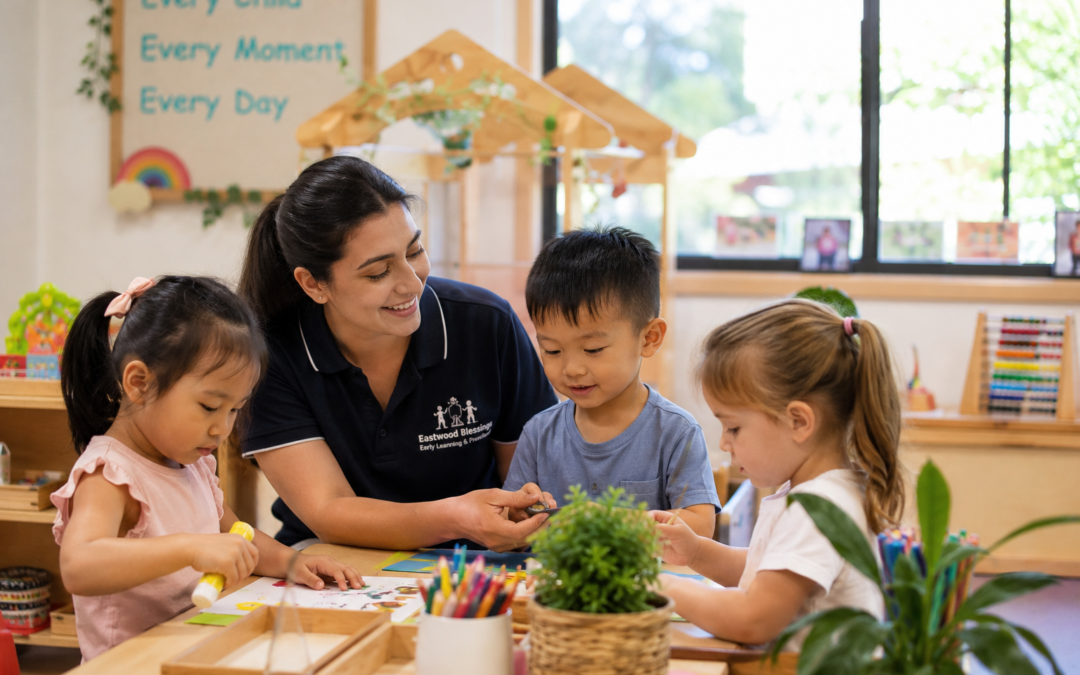
When you see your child hesitate before joining a new activity, you may wonder what will help them feel comfortable enough to have a go. At a Preschool in Eastwood, a warm environment, familiar routines, caring guidance, and opportunities to make simple choices can help your child feel secure enough to try something unfamiliar.
Why Does Feeling Safe Matter Before Your Child Tries Something New?
You may notice that your child is more willing to participate when they know what to expect. A friendly greeting, a familiar routine, and a calm response when something feels difficult can make a big difference.
When your child feels emotionally secure, you give them room to take small risks. They might pick up a paintbrush for the first time, join a group game, speak during story time, or attempt a new puzzle.
You do not need your child to get everything right. You want your child to feel that trying is worthwhile, even when the result is not perfect.
How Does a Small Learning Environment Help Your Child?
Your child can feel more comfortable when they are known as an individual rather than simply being part of a large group.
You may notice the difference in small moments. Your child might have someone nearby to encourage them when a building block falls, listen when they have something to say, or gently guide them when they are unsure about joining an activity.
That sense of familiarity can make a new experience feel much less intimidating.
Can Your Child Learn Confidence Through Everyday Choices?
Confidence does not appear overnight. You can help your child build it through ordinary decisions made throughout the day.
Your child might choose between drawing and construction play, decide which ingredients to use during cooking activities, or choose where to play outdoors. These simple choices give your child a sense of control.
When you allow your child to make age-appropriate decisions, you give them opportunities to practise independence. Over time, saying “I’ll try” can become easier than saying “I can’t.”
What Happens When Something Goes Wrong?
Your child will sometimes make mistakes. A tower may fall, a painting may not look as expected, or a new game may feel confusing.
Instead of seeing these moments as failures, you can help your child view them as part of learning. A calm response gives your child permission to try again without feeling embarrassed.
For example, if your child cannot complete a puzzle, you can encourage them to look at the pieces differently. That small moment can teach patience, persistence, and problem-solving without turning the experience into a formal lesson.
How Do Play and Creativity Help Your Child Take Small Risks?
Play gives your child a comfortable way to test ideas.
You might see your child pretending to run a café, building a tall structure, creating artwork, playing with numbers, or making up a story with friends. Each activity gives your child a chance to make decisions and see what happens next.
At Eastwood Blessings Early Learning and Preschool, you can also find opportunities such as STEAM activities, cooking, yoga, dance, and creative play. These experiences give your child different ways to participate according to their interests and comfort level.
You may find that your child who avoids one activity happily joins another. That flexibility allows your child to find confidence through experiences that feel enjoyable and achievable.
Why Does Outdoor Space Matter to Your Child’s Confidence?
A spacious outdoor environment can give your child another setting in which to test their abilities.
You might see your child climbing, running, balancing, gardening, creating imaginative games, or playing alongside friends. Outdoor activities can encourage your child to move freely while making choices about how they want to participate.
If your child feels unsure about joining a group game, they can begin with a smaller role. Once they feel comfortable, they may decide to become more involved.
That gradual process matters. You are giving your child time rather than expecting confidence to appear immediately.
How Can New Experiences Become Less Intimidating?
Your child can become more comfortable with unfamiliar situations when new experiences are introduced in a supportive way.
Regular incursions and excursions can give your child opportunities to encounter different people, settings, activities, and ideas. Instead of expecting your child to feel confident straight away, you can allow them to watch first, ask questions, and participate when they feel ready.
You may notice that your child initially stands back during a new activity and later joins in. That change can be a meaningful sign of growing confidence.
How Does Family Communication Help Your Child Feel Secure?
You know your child better than anyone. When you share your child’s interests, routines, concerns, and recent achievements, you give educators useful insight into what may help your child feel comfortable.
You can also talk with your child about their day using simple questions such as:
“What did you enjoy today?”
“Did you try anything new?”
“Who did you play with?”
“Was anything difficult?”
“What would you like to do tomorrow?”
These conversations can help you understand how your child is feeling and give your child the confidence to talk about new experiences.
What Can You Do When Your Child Is Hesitant?
You do not have to push your child into an activity immediately. You can acknowledge their feelings and give them time.
Try saying, “You can watch first,” or “You can have a little try when you feel ready.”
You can also celebrate effort rather than results. Saying, “You gave it a go,” can feel much more encouraging than focusing only on whether your child completed the activity.
When your child knows that you value their effort, trying something unfamiliar can feel safer.
FAQs
1. How can you help your child feel comfortable at preschool?
You can talk positively about the day, keep familiar routines at home, listen to your child’s concerns, and give them time to settle into new experiences.
2. Why can a smaller preschool setting help your child?
A smaller setting can give your child more opportunities to build familiar relationships and receive individual attention during everyday activities.
3. What can you do if your child does not want to join an activity?
You can avoid forcing the situation. Let your child watch first, offer gentle encouragement, and allow them to participate when they feel ready.
4. Can play help your child become more confident?
Yes. Through play, your child can make choices, communicate, solve problems, practise new skills, and learn that making mistakes is a normal part of trying.
5. How can outdoor activities help your child?
Outdoor activities can give your child opportunities to move, make choices, interact with others, use imagination, and practise physical skills in a relaxed setting.
6. How can you support your child after a difficult day?
You can listen without rushing to solve the problem. Ask what happened, acknowledge how your child felt, and remind them that they can try again another day.
7. What makes Eastwood Blessings Early Learning and Preschool a supportive choice?
You can find a boutique setting with a 21-child daily capacity, attentive care, tailored learning experiences, creative programs, outdoor play, incursions, excursions, and a family-focused approach.
Your child does not need to feel brave every moment. Sometimes confidence begins with watching from the side, asking one question, picking up one new tool, or joining a game for just a few minutes. When you give your child patience, encouragement, and a secure place to return to, those small attempts can gradually become a genuine willingness to try.
At Eastwood Blessings Early Learning and Preschool, your child can experience a caring environment where individual confidence, curiosity, and personal growth are supported each day.
