
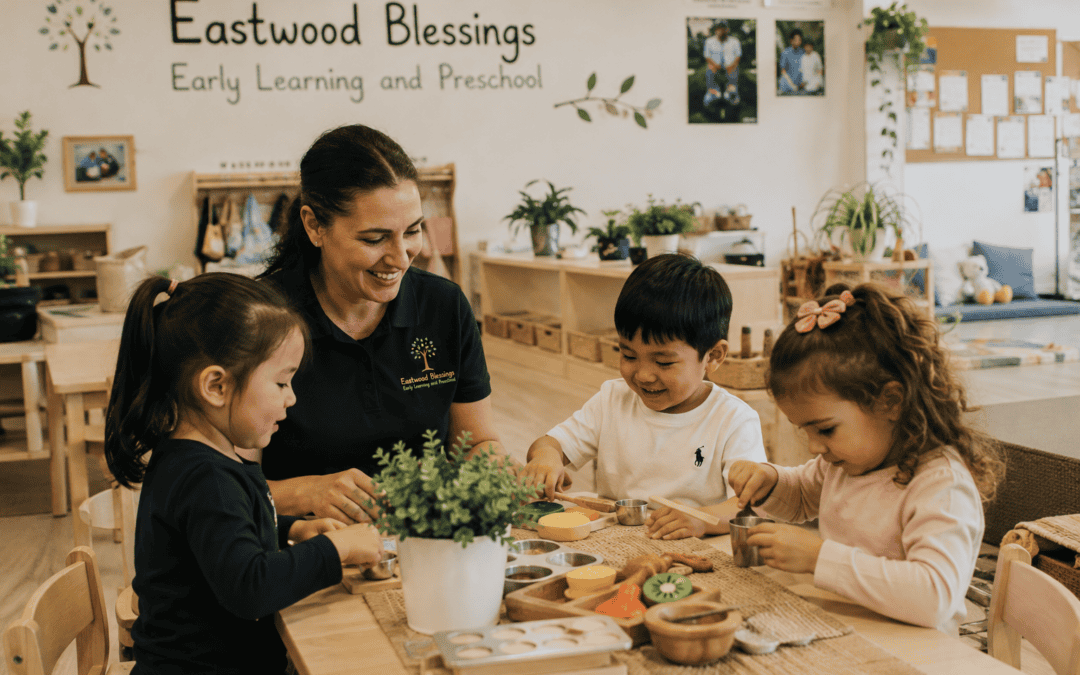
When you leave your child for the day, you want more than a place where they are simply looked after. Daycare in Eastwood can feel like a second home when your child is welcomed by familiar educators, surrounded by a small community, and given the comfort of routines, relationships, play, and spaces where they can truly be themselves.
What Helps Your Child Feel at Home Away From Home?
You know how quickly your child can become attached to familiar people and routines at home. Your child may have a favorite chair, a preferred bedtime story, or a particular way of starting the morning.
When your child enters an early learning environment, familiar patterns can make a big difference.
At Eastwood Blessings, your child can spend their day in a smaller 21-place setting where educators have more opportunities to know each child personally. You can feel more comfortable knowing that your child is not simply another face in a busy room.
Your child can be recognized for who they are their personality, interests, favorite activities, friendships, and the little things that make them unique.
Why Does a Smaller Setting Matter?
You may notice that your child behaves differently when they are surrounded by too many unfamiliar people.
A smaller environment can feel easier to understand. Your child can become familiar with the educators, children, rooms, routines, and daily rhythm without constantly adjusting to many new faces.
At Eastwood Blessings, the center operates with a 21-place capacity per day and maintains an over-resourced approach. This can give educators more time to notice the details that matter.
Noticing the Small Things
You may have a child who quietly watches a group before joining in. Another child may become unsettled after a difficult morning at home. When educators know your child well, they can notice these changes and respond with greater understanding.
That personal attention can help your child feel known rather than simply supervised.
How Can Familiar Educators Build Your Child’s Sense of Security?
Your child can take time to build trust with a new adult.
At first, your child may hold your hand tightly at drop-off or hesitate before walking into the room. With familiar educators and consistent interactions, your child can gradually learn that there is someone they can turn to when they feel unsure, upset, or excited.
Recognising Growing Confidence
You may eventually notice a change. Your child walks in and greets an educator without hesitation. They show someone a drawing they have made. They ask for help when they cannot complete a puzzle.
These moments can tell you that your child is beginning to feel secure.
How Do Everyday Routines Create a Homely Feeling?
You can help your child feel comfortable when their day has a familiar rhythm.
At Eastwood Blessings, daily experiences such as meals and rest are part of your child’s routine. Your child can enjoy hot meals and eat together with others, turning lunchtime into a social experience rather than simply a break between activities.
Rest time can also feel more familiar when your child has a comfortable and consistent setup, with bedsheets provided as part of the center’s routine.
These details may seem small to you, but they can make a difference to how your child experiences the day.
How Can Your Child Feel a Sense of Belonging?
Your child can feel more connected when they have a genuine role in the surrounding community.
At Eastwood Blessings, sustainability experiences can give your child opportunities to care for the environment and take responsibility for simple tasks. Your child may water plants, sort materials, or take part in activities that help them understand how their actions affect the world around them.
You can see how a simple responsibility can become meaningful. When your child cares for something living or contributes to a shared activity, they can begin to understand that they are an important part of the community.
How Can Learning Be Personal to Your Child?
You know that your child may not learn or respond in the same way as another child.
Your child may need more time to join a group activity. Another child may be ready to take the lead. One child may communicate through words, while another may express ideas through drawing, movement, or imaginative play.
Supporting Your Child’s Individual Needs
Tailored learning plans can help educators focus on your child’s individual interests and development.
If your child finds separation difficult, you can work with educators to create familiar routines around arrival. If your child becomes frustrated during challenging activities, you can give them opportunities to pause and try again.
This individual approach can make your child’s day feel more personal.
How Do Play and Daily Experiences Make Your Child Feel Comfortable?
Your child can feel at home when they have opportunities to play in ways that feel natural.
At Eastwood Blessings, your child can take part in experiences such as cooking, STEAM activities, yoga, outdoor play, incursions, and excursions.
Learning Through Everyday Experiences
Cooking can feel like something your child does with family while also supporting counting, measuring, following steps, and cooperation. Yoga can give your child a calm moment to focus on movement and breathing. STEAM activities can encourage your child to ask questions and solve practical problems.
You can give your child a mixture of familiar and new experiences while keeping the day engaging and meaningful.
Why Do Outdoor Spaces Matter?
You may notice that your child has a completely different energy level outdoors.
A large outdoor space can give your child room to run, move, play, and spend time in nature. Your child can also find quieter moments when they need a break from busy group activities.
Having access to different spaces can help your child choose how they want to participate. Your child may spend one part of the day climbing and running before moving inside for a quieter creative activity.
That balance can help your child feel comfortable throughout the day.
What Are the Signs That Your Child Feels at Home at Daycare?
When you visit a centre, you can look beyond the toys and equipment.
You can watch how educators speak to children. You can notice whether children seem comfortable approaching adults. You can ask how educators support a child who is upset, shy, frustrated, or reluctant to join a group.
You can also ask how the centre communicates with families and how individual learning plans are developed.
Most importantly, you can observe whether your child feels comfortable in the space. Sometimes your child’s reaction can tell you more than a long list of facilities.
At Eastwood Blessings Early Learning and Preschool, your child can experience a smaller, family-focused environment where daily care and early learning come together. With familiar educators, tailored learning plans, shared meals, rest routines, outdoor spaces, sustainability experiences, and activities such as cooking, yoga, and STEAM, you can give your child a day that feels both engaging and reassuring.
FAQs
1. What can make an early learning centre feel like a second home for your child?
Your child can feel more at home when they have familiar educators, predictable routines, positive relationships, comfortable spaces, and opportunities to take part in activities that interest them.
2. Why can a smaller centre be helpful for your child?
A smaller setting can give educators more opportunities to know your child’s personality, interests, routines, and individual needs.
3. How can educators help your child settle into the day?
Educators can welcome your child warmly, follow familiar routines, provide reassurance, and give your child time to become comfortable at their own pace.
4. How can daily meals and rest routines support your child?
Familiar meal and rest routines can help your child understand what to expect during the day and create a more comfortable daily rhythm.
5. How can your child develop a sense of belonging?
Your child can develop belonging by building relationships, participating in group experiences, helping with simple responsibilities, and contributing to activities within the centre community.
6. How can tailored learning plans support your child?
Tailored learning plans can help educators provide experiences based on your child’s interests, strengths, development, and areas where your child may benefit from additional support.
7. What should you look for when visiting a daycare?
You can observe how educators interact with children, how children respond to the environment, how individual needs are supported, and whether the overall atmosphere feels warm and welcoming.
Your child does not need a place that simply feels like home because it has familiar furniture or colourful rooms. Your child needs people who notice when they are happy, understand when they are unsettled, celebrate their small achievements, and give them time to feel comfortable. When your child can build genuine relationships, take part in familiar routines, and feel that they truly belong, you can begin to see what makes an early learning environment feel like a second home.
