
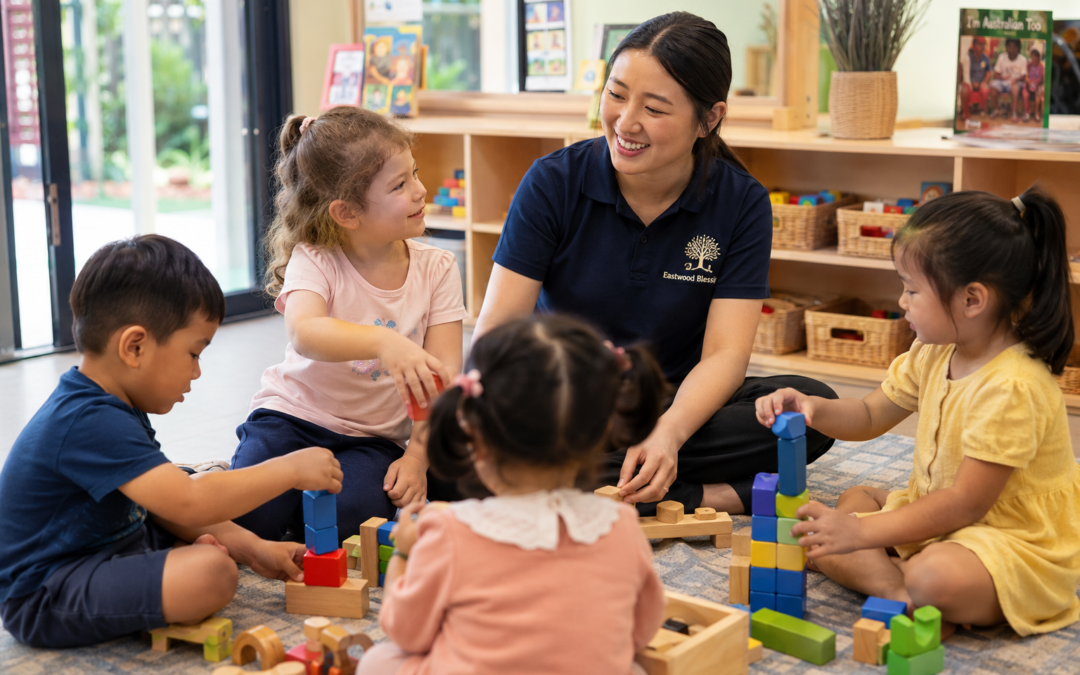
Your child may feel excited about joining other children, yet still hesitate when a group activity begins. At Preschool in Eastwood, your child can experience small, comfortable opportunities to interact, participate, and become familiar with group routines without feeling rushed.
Why Can First Group Experiences Feel Unfamiliar?
You may have seen your child happily play beside another child but become quieter when several children gather together. This reaction can be completely understandable.
Your child may not yet know when to speak, how to join a game, or what to do when another child has the same idea. A new group can bring many things to process at once, including different voices, shared toys, unfamiliar routines, and new social expectations.
Giving your child time to watch before joining can make the experience feel more manageable.
How Can Small Everyday Moments Help Your Child Join In?
Starting With Simple Shared Activities
Your child does not need to begin with a large group activity.
A shared puzzle, drawing table or building activity can give your child a natural reason to sit near others. Your child may begin by watching, then pick up a piece, offer a toy, or make a small comment.
These simple interactions can gradually become familiar.
Purposeful learning areas, such as a construction area, creativity and art space, book corner, numeracy corner and home corner, can give your child different ways to participate alongside others.
Learning to Take Turns
Taking turns can be challenging when your child is excited about an activity.
You may hear, “My turn!” when another child is using a favourite toy. With patient support, your child can begin to understand that waiting does not mean missing out.
A simple game, shared puzzle or group story can give your child repeated opportunities to practise waiting, listening and participating.
These experiences can help group routines become less unfamiliar over time.
How Can Play Help Your Child Feel Comfortable Around Others?
Play gives your child something to focus on while social interaction happens naturally.
Your child might build a road with blocks while another child adds a car. Your child might draw alongside another child and begin talking about the picture. You may even notice your child copying an idea before starting something independently.
Play-based learning can follow the Early Years Learning Framework, with a focus on identity, community, wellbeing, learning and communication. This gives your child everyday opportunities to learn through play while building confidence, social skills and communication.
This means your child can develop social skills through activities rather than being expected to simply sit and listen.
How Can Outdoor Play Help Your Child Enjoy Time With Friends?
Outdoor play can give your child more physical space while creating natural opportunities for interaction.
Your child may run with a friend, join a pretend game, play with equipment, or work together on a creative idea. Movement can sometimes make social interaction feel less formal.
You may notice your child becoming more willing to approach others when there is an activity already happening.
How Can Group Activities Support Communication?
Your child does not need to have long conversations to practise communication.
A group experience can begin with a simple request such as, “Can I have that?” or “Can I play too?” Your child can also practise listening when another child shares an idea.
Cooking can be a fun way for your child to learn through everyday experiences. They can chat about different ingredients, follow simple instructions, count what they need, and enjoy working alongside other children while making something together.
Cooking classes give children a fun, hands-on way to practise simple maths and language skills while learning about healthy foods and making their own food choices.
How Can Yoga and Dance Help Your Child Enjoy Group Activities?
Your child may find it easier to participate when everyone is doing the same movement together.
A dance or yoga session can give your child a clear activity to follow. Your child can watch the educator, copy movements, and gradually become more comfortable participating alongside others.
Dance, yoga and stretching can become enjoyable parts of your child’s day. These activities give them a chance to move their body, build physical strength, feel more confident and take a quiet moment to relax.
Your child does not need to perform every movement perfectly. Joining in at a comfortable level can be a valuable first step.
How Can STEAM Activities Encourage Children to Work Together?
Some group activities naturally create reasons for children to communicate.
Your child might work with another child to build something, test an idea or solve a small problem. One child may hold a piece while another decides where it should go.
STEAM learning gives your child space to ask questions, try different ideas, and work things out through hands-on activities.
When your child works towards something with others, they have natural reasons to talk, listen, and share ideas. Cooperation becomes part of the experience, helping your child connect with others without feeling pressured.
Why Does a Smaller Setting Matter for Your Child?
A busy environment can sometimes feel overwhelming when your child is still learning how group experiences work.
Eastwood Blessings operates as a 21-place centre per day and states that it is over-ratioed to focus on individual children’s needs. The centre also provides tailored learning programs based on each child’s unique journey.
This gives your child more chances to receive individual attention, ask questions, share their ideas, and get support when they need it during everyday activities.
How Can Educators Help Your Child Join at Their Own Pace?
Your child may not want to join a group immediately.
Your child might stand nearby, watch what is happening, and decide to participate later. A calm educator can give your child time while offering a gentle invitation when the moment feels appropriate.
Eastwood Blessings describes its educators as developing tailored learning plans and building strong family partnerships.
You can also stay connected with educators and share what your child enjoys at home. This can help create a clearer picture of what makes your child feel comfortable when joining others.
What Small Signs Can Show Your Child Is Becoming More Comfortable?
You may notice your child beginning to greet another child, sit closer to a group, share a toy, or ask to join an activity.
Your child might also start talking about friends at home or tell you about something that happened during group play.
These small changes can matter. You do not need to see your child becoming the loudest person in the room. Feeling comfortable enough to participate, communicate, and enjoy time with others can be just as meaningful.
At Eastwood Blessings Early Learning and Preschool, your child can experience group learning through play, cooking, STEAM activities, yoga, outdoor experiences, and purposeful learning spaces.
FAQs
1. How can your child become more comfortable in group activities?
Your child can become more comfortable through repeated, gentle opportunities to participate in shared play, conversations, and everyday routines without feeling rushed.
2. What if your child prefers to watch before joining?
Watching can be a natural first step. Your child can observe how the activity works and decide when to participate.
3. Can play help your child develop social skills?
Yes. Play can give your child opportunities to practise sharing, communication, cooperation, turn-taking and problem-solving while interacting with others.
4. How can outdoor play support group experiences?
Outdoor play gives your child physical space for shared games, movement and imaginative activities, creating natural opportunities to interact with other children.
5. How can educators support your child during group activities?
Educators can give your child time to settle, encourage and offer suitable opportunities to participate based on your child’s individual needs and interests.
