
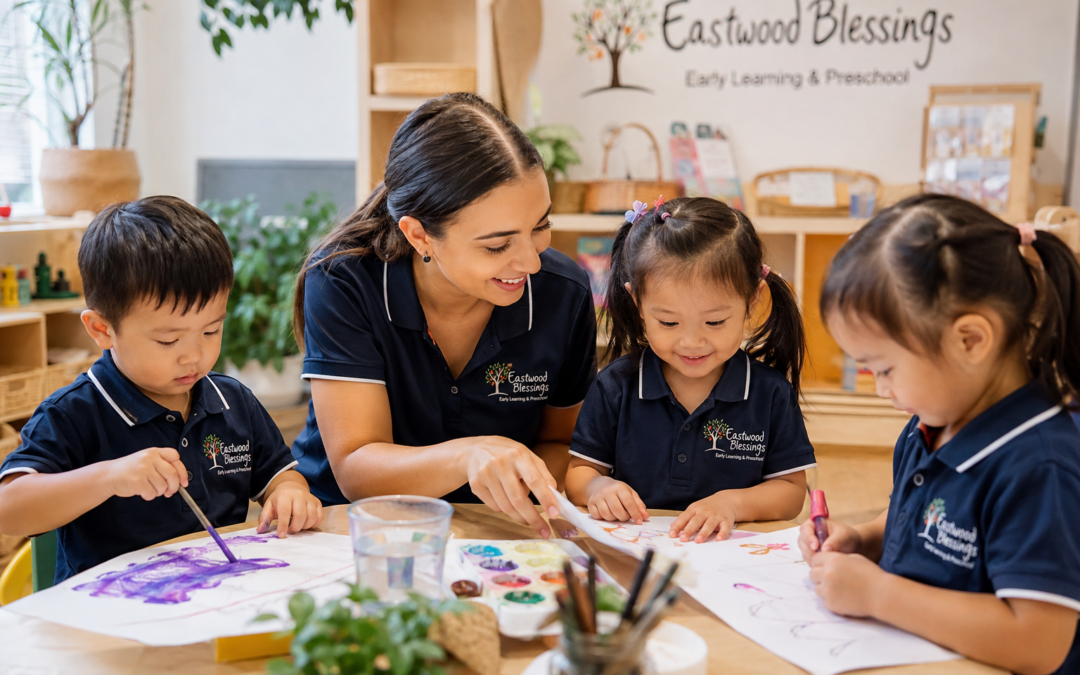
Starting preschool is a new experience, and your child may need time to feel comfortable with everything that comes with it. Preschool Enrolment in Eastwood can help you take that first step with a setting where familiar play, caring relationships, and simple daily routines make the change feel less overwhelming.
At Eastwood Blessings Early Learning and Preschool, your child can learn through play, hands-on activities, indoor and outdoor experiences, and everyday conversations. With a small daily group and above-ratio staffing, your child can have more opportunities to build trust with educators, settle into the routine, and gradually feel at home in the new environment.
Why Can a Familiar Routine Make Starting Preschool Easier?
Your child may feel more settled when the day follows a predictable pattern. Knowing when it is time to play, eat, rest, go outside, and return home can make a new environment feel less unfamiliar.
You can support this at home by keeping morning routines simple. Getting dressed, having breakfast, packing a small bag, and saying goodbye in the same way each day can give your child something familiar to hold onto.
At the centre, daily care is combined with learning, so your child can gradually become comfortable with routines without feeling that learning means sitting still for long periods.
Small Steps Can Build Confidence
You may notice that your child needs time before joining a group activity. That is completely natural.
Instead of expecting your child to participate immediately, you can allow time to watch, listen, and become comfortable. A quiet book corner, an individual activity, or a familiar educator can provide a softer starting point.
The centre provides quiet areas alongside indoor and outdoor learning spaces, giving your child different places to choose from during the day.
How Does Play Help Your Child Move Beyond Home Comforts?
Your child already learns through play at home. Preschool can take that familiar way of learning and place it within a social environment.
You might see your child building a tower with blocks, pretending to cook, painting a picture, completing a puzzle, or looking through a book. These activities can look simple, but they give your child opportunities to communicate, make choices, solve small problems, and interact with others.
The learning environment includes dedicated areas for construction, creativity and art, numeracy, books, puzzles, home play, nature, and outdoor activities.
How Familiar Activities Can Help Your Child Settle In?
Cooking can connect home life with preschool learning. Your child can count ingredients, talk about colours and textures, follow simple instructions, and practise new words while preparing food.
STEAM activities can create similar connections. Your child can experiment, build, question, create, and work alongside others rather than simply being answered.
These experiences reflect the centre’s focus on creativity, problem-solving, collaboration, communication, and engagement.
How Extra Support Can Help Your Child Feel Comfortable?
You may worry that your child will feel overwhelmed in a new group. A smaller setting can make those first interactions feel more manageable.
With a daily capacity of 21 children and above-ratio staffing, Eastwood Blessings Early Learning and Preschool focuses closely on individual needs. Tailored learning programs are also used to support each child’s own learning journey.
Talking with educators about your child’s routines, interests, and little preferences can make settling in easier. Whether your child enjoys drawing, loves outdoor play, or takes a little longer to join group activities, sharing these details can help educators understand your child and provide the right support.
How Can Family Communication Support the Transition?
You know your child better than anyone. Sharing useful details about your child’s routines, interests, comfort items, communication style, and personality can help educators understand what your child may need.
Regular communication can also help you understand how your child is settling. Instead of only asking whether your child had a good day, you can ask what your child enjoyed, who your child played with, and which activities held your child’s attention.
You know the little things that help your child feel safe and settled. When you share their little likes, dislikes, routines, and interests with educators, it can help your child feel more comfortable and understood.
What Can You Do Before Your Child Starts?
A little preparation at home can help your child feel more comfortable with the idea of preschool. You can talk about the people they may meet, the activities they may enjoy, and what their day might look like.
Let your child practise small routines such as packing away toys, washing hands, choosing activities, and putting on shoes. You can also keep mornings calm and familiar, so leaving home does not feel rushed.
Most importantly, give your child time to adjust. Your reassurance, familiar routines, and positive conversations can help preschool feel like a natural next step rather than a sudden change.
How Does School Readiness Grow Naturally?
School readiness is not only about recognising letters or numbers. Your child also needs opportunities to communicate, make choices, manage emotions, interact with others, and attempt tasks independently.
The centre’s approach follows the Early Years Learning Framework, with attention to identity, community, wellbeing, learning, and communication.
That means your child’s progress can happen through ordinary experiences. A shared game can support cooperation. A cooking activity can introduce early maths. Yoga can encourage body awareness. Outdoor play can provide space for movement and social interaction.
Your child does not need to rush through these experiences. You can give your child time to become comfortable, build relationships, and gradually take part in the wider learning environment.
A Gentle Beginning Can Shape the Days Ahead
Your child’s first experience of preschool does not need to happen all at once. With familiar routines, caring relationships, meaningful play, individual attention, and opportunities to make small choices, you can give your child time to feel comfortable in a new setting.
When home and preschool work together, the change can feel less like leaving one world behind and more like adding another place where your child can feel safe, supported, curious, and ready to take the next small step.
At Eastwood Blessings Early Learning and Preschool, your child can take part in a range of experiences that make each day feel engaging and meaningful. From STEAM activities and cooking to yoga, outdoor play, and creative learning, your child has different ways to learn, participate, and build confidence at their own pace.
FAQs
1. How can preschool help my child adjust to a new routine?
A predictable daily rhythm can help your child understand what happens next. Regular play, meals, rest, movement, and transitions can make the new setting feel easier to understand.
2. What if my child becomes upset at drop-off?
You can keep your goodbye calm and consistent. Sharing your child’s usual comfort strategies with educators can also help them respond appropriately during the transition.
3. Does play-based learning prepare my child for school?
Yes. Play can give your child opportunities to practise communication, problem-solving, cooperation, decision-making, and independence while learning through meaningful activities.
4. Can my child learn at their own pace?
A tailored approach can give your child opportunities to participate according to individual interests, abilities, and developing confidence rather than following exactly the same path as every other child.
5. What activities can help my child become comfortable with learning?
You can introduce activities such as drawing, building, puzzles, storytelling, pretend play, simple cooking, movement, and outdoor games. These activities can make learning feel familiar because they connect with things your child already enjoys.
6. How can I stay involved after my child starts?
You can maintain open conversations with educators about your child’s interests, routines, experiences, and progress. A strong connection between home and preschool can give your child greater consistency.
