
Your child’s early years are full of moments worth making time for, but your family still needs a routine that works in real life. Part-Time Daycare in Eastwood can bring these two needs together. You can give your child a place where learning happens through play, conversations, friendships, and everyday experiences, while keeping part of your week free for the things that matter to your family.
A part-time routine can give your child something to look forward to while leaving you with time for the rest of family life. Your child can enjoy familiar faces, playful learning, and new experiences, then return home with little stories, questions, and achievements to share with you.
How Can Part-Time Care Fit Into Your Family’s Routine?
Your week may not look the same every day. You may work selected days, manage other family commitments, study, or simply prefer a gradual introduction to group care.
A part-time arrangement can give you more room to organise your week around your child’s needs. Instead of changing your entire routine around childcare, you can look for a schedule that fits naturally into your existing commitments.
Regular attendance can make a new learning environment feel familiar over time. Seeing the same educators, returning to favourite activities and recognising familiar routines can help create a sense of comfort and belonging.
You can also keep the connection going at home by talking about the day, asking about favourite activities, or encouraging your child to share a little story about what happened. These simple conversations can help link home experiences with learning experiences at daycare.
How Can Part-Time Care Keep Learning on Track?
You do not need a five-day childcare schedule to give your child a steady stream of learning experiences. A well-planned part-time routine can give you enough consistency for your child to become familiar with daily rhythms, activities, and educators.
When your child returns each week, there are opportunities to pick up familiar interests and try something a little different. A love of building might lead to simple problem-solving, while an interest in stories might encourage more questions and conversations. These small steps can keep learning moving naturally from one experience to the next.
How Can Familiar Routines Help Your Child Feel More Confident?
Walking into a familiar room, seeing familiar educators and knowing what comes next can make a big difference when your child is still getting comfortable with daycare. Instead of wondering what will happen, your child can begin to recognise the rhythm of the day and feel more ready to join in.
You may notice small changes over time. Your child might walk in more confidently, choose an activity without waiting for help, or feel comfortable approaching another child. These moments may seem simple, but they show that your child is becoming more secure in the environment.
When you talk about these experiences at home, you can give your child another chance to share what they enjoyed, what felt difficult, and what they would like to do again. That familiar connection between home and daycare can make each new experience feel a little easier.
How Does Play Support Your Child’s Early Learning?
Your child does not need every learning experience to look like a traditional lesson.
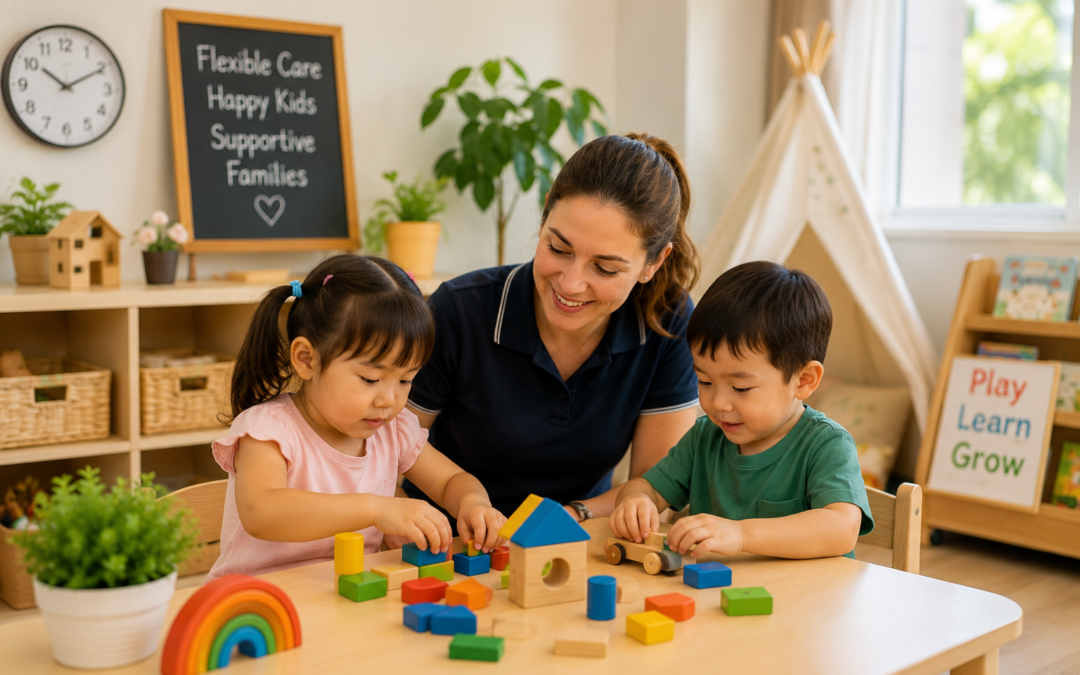
Building with blocks can involve planning and problem-solving. Drawing can encourage communication and creativity. Pretend play can help your child practise conversations and understand different roles. Outdoor games can involve movement, turn-taking, and cooperation.
Small Moments Can Carry Big Learning
Imagine your child trying to pour water into a cup during a play activity.
The first attempt may spill across the table.
Your child might pause, look at the mess, and try again with a slower hand.
What looks like a small moment can involve hand control, concentration, problem-solving, and confidence. With gentle guidance, your child can work out how much water to pour, adjust their movements, and have another go.
These little moments can turn ordinary play into a chance to learn, think, and try something new.
How Can Part-Time Care Help Your Child Make Friends?
Your child may begin by watching another child play before slowly joining in. Seeing familiar faces regularly can make it easier to start conversations, join activities, and feel comfortable around others.
Even simple moments, such as choosing a game together or talking during outdoor play, can help your child learn how to connect, listen, and enjoy being part of a group.
How Can Flexible Care Fit Around Your Family Life?
Choosing care does not mean every part of your child’s learning has to happen away from home.
With a schedule that suits you, you can still have time for family meals, library visits, outdoor walks, appointments, quiet afternoons, or simply unplanned time together.
That balance matters because your child can benefit from both group experiences and relaxed moments with you.
You may also find that part-time attendance gives you useful observations about your child. A conversation with educators can help you understand what interests your child, where your child is becoming more independent, and which experiences may be worth continuing at home.
What Should You Consider When Choosing Childcare?
Before making a decision, you can ask practical questions about:
- Available part-time days
- Daily routines
- Learning experiences
- Indoor and outdoor play
- Communication with families
- Educator support
You can then compare those details with your child’s personality and your family’s weekly routine. At Eastwood Blessings Early Learning and Preschool, you can look for a routine that feels comfortable for your child while fitting naturally into your week.
FAQs
1. Can part-time daycare support early learning?
Yes. Your child can learn through play, conversations, routines, creative activities, movement, and social experiences during regular attendance.
2. Is part-time care suitable if your child is new to childcare?
It can be a gentle option for some families. You can discuss your child’s routine, personality, comfort level, and attendance pattern with the centre before starting.
3. Will my child still build friendships with part-time attendance?
Your child can have repeated opportunities to interact with familiar children. Regular attendance on consistent days may also help your child become familiar with group routines.
4. Can you continue learning at home?
Absolutely. You can continue learning through reading together, cooking, drawing, outdoor play, conversations, simple household tasks, and imaginative games.
5. How can you choose the right part-time arrangement?
Start with your family’s weekly commitments, then consider your child’s routine, preferred days, comfort with group settings, and the learning environment offered by the centre.
6. Can educators help you understand your child’s progress?
Regular communication can give you useful insight into your child’s interests, interactions, emerging independence, and everyday learning experiences.
