
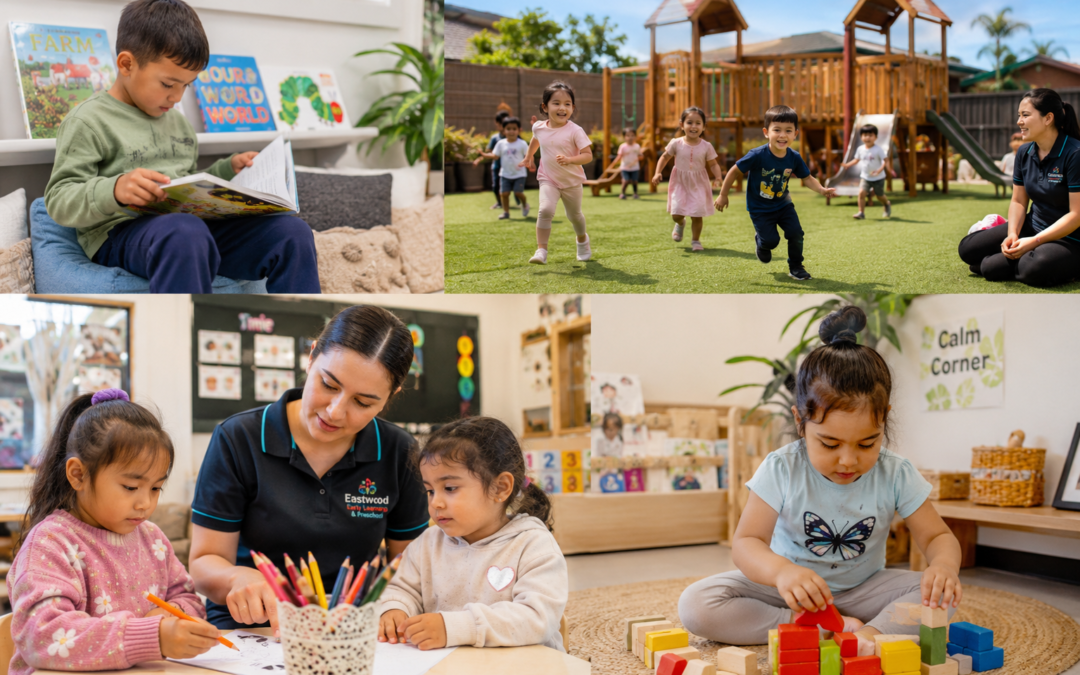
When you think about your child’s day, you may picture busy play, conversations, outdoor games, and plenty of laughter. When you choose Long Day Care in Eastwood, you can also look for a setting where your child can step away from the activity when a quieter moment feels more comfortable.
Your child does not need to be involved in every group activity from morning until afternoon. Some moments may call for friends and movement, while others may call for a book, calm play, or simply a little space. A balanced daily environment can give you confidence that both sides of your child’s personality have room to grow.
Why Does Your Child Need Both Social and Quiet Time?
Your child can enjoy being around other children while still needing time away from a busy group.
During social play, you can see your child practise sharing, taking turns, listening and communicating. A simple game with another child can become a chance to learn how to wait, cooperate and respond to different ideas.
Then there may be another part of the day when your child feels tired or wants something quieter. Sitting with a book, working on a puzzle or enjoying calm play can give your child time to slow down.
You can think of the day as having different rhythms rather than expecting your child to stay at the same energy level all day.
How Can a Calm Space Help Your Child?
A quiet area can be particularly helpful when your child has had a busy morning.
You may notice this at home when your child happily plays for a while and then suddenly wants to sit alone. That does not always mean something is wrong. Sometimes your child needs fewer sounds, fewer people, and less activity for a little while.
A Quiet Moment Does Not Mean Missing Out
You do not need to worry that your child is losing valuable learning time by stepping away from group activity.
Your child can learn through calm experiences too. Looking through a picture book can support language. Completing a puzzle can encourage concentration. Drawing quietly can give your child time to make independent choices.
These small moments can be especially useful after a lively group experience.
What Happens When Your Child Wants More Social Time?
There may also be days when your child cannot wait to join in.
You may see your child heading straight towards friends, choosing an activity and becoming involved without much encouragement. Group experiences can give your child opportunities to communicate, cooperate and share ideas.
At Eastwood Blessings Early Learning and Preschool, play-based learning forms part of the daily approach, with activities that can include hands-on experiences, STEAM learning, cooking, yoga, dance and outdoor play.
Your child can move between different experiences instead of spending the whole day doing one type of activity.
How Can Educators Respond to Your Child’s Changing Needs?
You know that your child’s mood can change from one day to the next.
One morning, you may see your child arrive ready to talk and play. On another morning, your child may hold your hand a little longer before feeling ready to join the group. A responsive educator can give your child time rather than expecting the same response every day.
At Eastwood Blessings Early Learning and Preschool, learning programs are tailored around each child’s individual journey, while educators work with families to support children’s development.
That approach can make the daily routine feel more personal. Your child can receive encouragement when joining others and patience when a quieter activity feels more suitable.
Can Outdoor Areas Give Your Child More Choice?
Outdoor play can offer your child a different kind of social experience.
Your child may run, build, create, talk with friends or take part in active games. At another point, your child may choose a quieter corner or a slower activity.
Having different spaces available can give your child more control over how to spend certain parts of the day. The centre’s outdoor space and purposeful indoor areas provide opportunities for active play, creative work, construction, books and other interests.
What Can You Look For as a Parent?
You know your child’s personality best, so you can look for a childcare setting that gives your child room to be themselves.
Your child may love chatting and playing with friends one moment, then want to sit quietly with a favourite activity the next. You can look for a daily routine that allows both experiences without making your child feel rushed.
You can also ask how your child can move from active play to a calmer activity when they feel tired. This can help your child enjoy social time while still having the quiet moments they need during the day.
FAQs
1. Can my child have quiet time during a busy childcare day?
Yes. You can look for a setting where your child has access to calm spaces and quieter activities when they need a break from group activity.
2. Does quiet time stop my child from socialising?
No. Your child can move between social experiences and independent activities throughout the day. A quiet moment can give your child time to recharge before joining others again.
3. How can group play help my child?
Group play can give your child everyday opportunities to practise communication, sharing, cooperation, listening and turn-taking.
4. What can my child do during quieter moments?
Your child may enjoy books, puzzles, drawing, calm play or simply spending some time in a peaceful area. The right choice can depend on your child’s mood and interests that day.
5. Why does having different spaces matter for my child?
Different spaces can give your child choices. You can feel more comfortable knowing your child does not have to remain in a busy group when a calmer experience feels better.
