
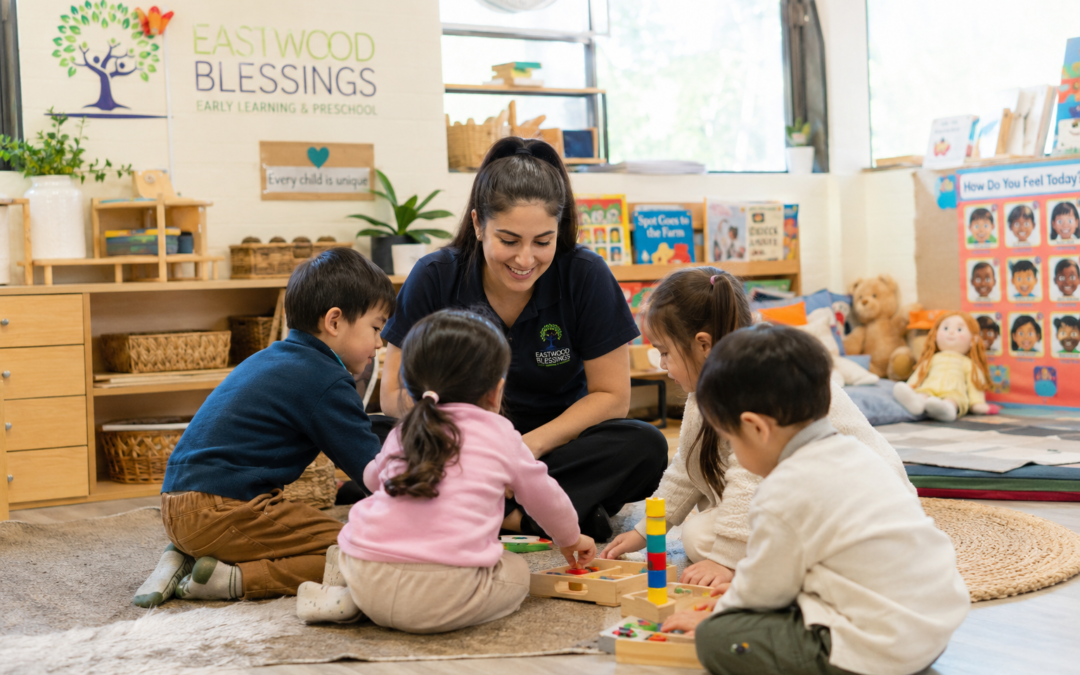
You know your child has their own little way of doing things, whether they happily jump into something new or prefer to take their time and watch first. Their favourite activities can also tell you a lot about what makes them happy and keeps them interested. Daycare in Eastwood can support that individuality by giving your child opportunities to learn, play, and interact in ways that suit their interests, temperament, and growing abilities.
At Eastwood Blessings Early Learning and Preschool, you can give your child a warm and family-focused environment where individual needs are considered as part of everyday care and learning. With tailored learning programs and a 21-place setting, your child can receive individual attention while becoming comfortable with their daily routine.
How Can Daycare Recognise Your Child’s Individual Personality?
You may already know whether your child is naturally outgoing, quietly observant, highly active, or happiest when concentrating on one particular activity.
Your child might walk into a new room and immediately start talking to other children. You might have another child who prefers to stand nearby and watch before joining in. Neither approach is wrong.
Your child needs time and opportunities to participate in ways that feel comfortable.
When educators take the time to understand your child’s behaviour, interests and preferences, your child can feel more accepted rather than pressured to behave like everyone else.
How Can Your Child’s Interests Be Part of Their Day?
Your child’s favourite activities can give you clues about their personality.
If your child loves creating things, you may notice how much time they spend drawing, building or making things from different materials. If your child enjoys talking, stories and pretend games may naturally hold their attention.
A learning environment with different experiences can give your child opportunities to follow these interests.
At Eastwood Blessings, your child can take part in creative activities, construction, books, numeracy, early puzzles and nature-based experiences. These different options can give your child more than one way to participate during the day.
How Creating Can Give Your Child a Way to Show Their Personality
Your child can use art, construction, and hands-on activities to express ideas without always needing to explain them with words.
A simple drawing may tell you what your child has been thinking about. A block construction may show how they approach a problem. Pretend play may reveal stories and ideas that your child has been carrying around in their imagination.
How Hands-On Activities Can Suit Your Child’s Personality
Your child may prefer doing something rather than simply listening.
Cooking classes can give your child practical experiences involving measuring, counting, communication, and following instructions. You can see how your child’s natural interest in helping can become part of their learning.
How Can Educators Support Different Temperaments?
Your child’s temperament can affect how they respond to everyday experiences.
Your child might happily join in when something new comes along, while another day they may want to watch, take their time, and feel comfortable before having a go.
Your child does not need to rush.
A consistent routine and familiar educators can give your child time to become comfortable. When educators understand that your child may need a slower introduction to something new, they can respond with patience instead of expecting immediate participation.
This can help your child feel that their natural way of responding is respected.
How Can Your Child Build Confidence Without Changing Their Personality?
Supporting confidence does not mean turning a quiet child into the loudest child in the room.
You can see your child’s confidence in simple moments, like asking an educator for help, joining a group activity, showing you something they have made, or trying to do something on their own.
These small moments can matter.
Your child can build confidence when they are given reasonable opportunities to make choices and experience success without being compared with another child.
Eastwood Blessings includes school-readiness experiences that support confidence and independence as your child prepares for future learning.
How Can Friendships Respect Your Child’s Personality?
Your child may not make friends in the same way as another child.
You may see your child become close to one particular friend rather than joining a large group. Your child may enjoy quiet activities with another child or prefer energetic outdoor games.
Both can be valuable social experiences.
Through shared play, your child can practise listening, taking turns, sharing ideas and communicating their feelings. At the same time, your child can remain comfortable with their own personality.
You can get a little glimpse into your child’s day by asking simple questions like, “Who did you play with today?” or “What was your favourite thing to do together?”
How Can Different Learning Spaces Suit Your Child?
Your child’s personality can influence the environment they enjoy.
Your energetic child may want space to run, climb, and move. Your child who enjoys quiet concentration may prefer books, puzzles, or creative activities.
Having different spaces can give your child opportunities to choose experiences that suit their interests and energy throughout the day.
How Can a Smaller Setting Help Your Child Feel Understood?
You want your child’s educators to know the little things that make them who they are.
Eastwood Blessings operates as a 21-place centre per day and highlights its focus on individual needs through higher educator-to-child ratios.
In a smaller setting, your child can have opportunities to develop familiar relationships with educators. Over time, your child may become more comfortable sharing their preferences, asking questions, and expressing when they need help.
That familiarity can be particularly helpful when your child is still becoming comfortable away from home.
How Can You Help Educators Understand Your Child’s Personality?
You know things about your child that may not be immediately obvious to someone else.
You know whether your child needs a little time after waking up. You know which activity can instantly capture their attention. You know what usually helps when they feel frustrated.
Sharing these details with educators can help them understand your child more fully.
Eastwood Blessings places importance on communication with families, giving you opportunities to share information about your child’s interests, experiences, and individual needs.
You can mention something as simple as a new interest your child has developed or an activity they have suddenly started enjoying at home.
Why Does Your Child’s Individual Personality Matter?
Your child has their own personality, interests, and way of doing things, and these little differences are part of what makes them special.
When your child feels comfortable, listened to, and accepted, they can take part in their day without feeling they have to be someone else.
At Eastwood Blessings Early Learning and Preschool, your child can enjoy creative activities, practical experiences, indoor and outdoor play, and everyday learning while having educators who take the time to understand what makes them unique.
Frequently Asked Questions
1. How can daycare support my child’s unique personality?
Your child can benefit from a setting where their temperament, interests, and individual ways of participating are respected rather than treated as something that needs to change.
2. What if my child is naturally quiet?
You can give your child time to become comfortable. Your child can participate gradually without needing to be the most talkative person in the group.
3. Can my child’s interests be included in their learning?
Yes. Activities such as art, construction, books, cooking, STEAM, and outdoor experiences can give your child different ways to follow their interests.
4. How can friendships support my child without changing their personality?
Your child can learn to communicate, cooperate, and share while still choosing the types of activities and relationships that feel natural to them.
5. Can a smaller setting help my child feel understood?
A smaller setting can provide opportunities for your child to build familiar relationships with educators who become more familiar with their preferences and individual needs.
6. How can you help educators understand your child?
You can share information about your child’s personality, interests, routines, likes and dislikes. Small details can give educators useful insight into what helps your child feel comfortable.
