
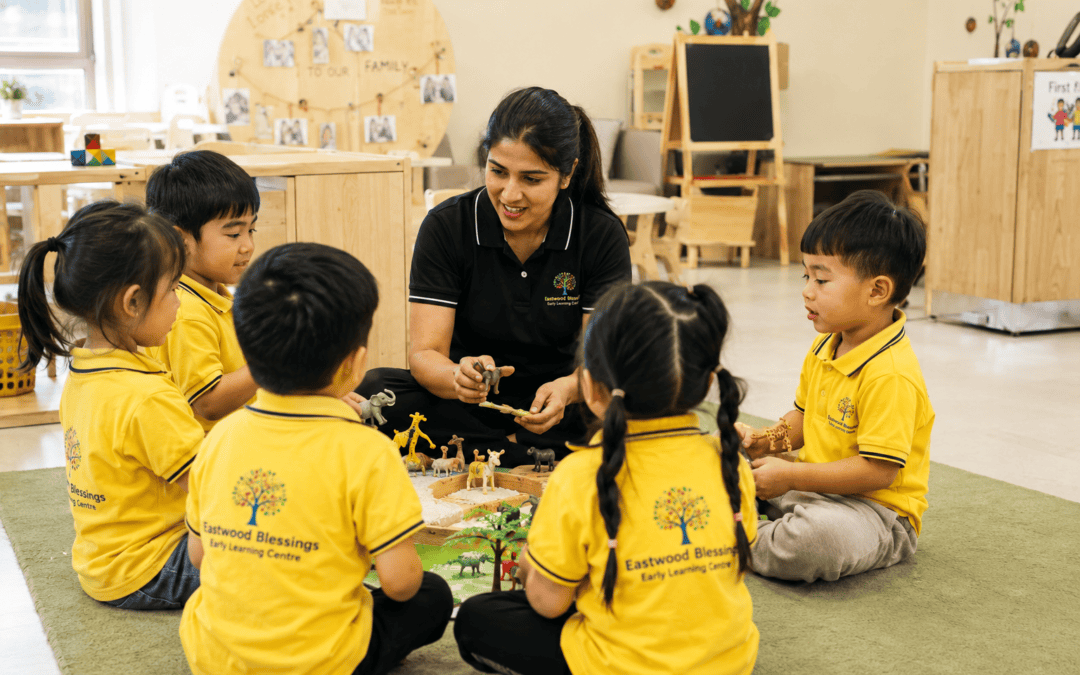
Before your kids can read their first book, they are already learning some of life’s most important lessons: how to understand others, express their feelings, and make sense of the world around them. A good preschool in Eastwood can support your child as they learn to put their feelings into words, take turns when they would rather go first, join a group of children without feeling left out, and try again when something does not work the first time. These moments may seem small, but they shape how your child handles friendships, emotions, and challenges.
As a parent, it is natural to notice when your child recognizes a letter or counts to ten. But the social and emotional skills they develop between the ages of two and five can be just as important. They help your child become more confident, connect with others, manage big feelings, and feel ready for the new experiences that come with starting school.
What Social and Emotional Growth Actually Looks Like at This Age?
When your child is three or four years old, you start to notice your child handling everyday situations a little differently. Instead of knocking down another child’s block tower, they might ask if they can play. They might give up the red scooter when it is another child’s turn, although they are not happy about it. And when something goes wrong, they may begin to say, “I am sad,” instead of reacting with a tantrum.
The Early Years Learning Framework, which guides the program at Eastwood Blessings, focuses on five areas of learning: identity, community, wellbeing, learning, and communication. These areas help children understand themselves, build relationships, express their feelings, and communicate with others. When children feel safe and supported, they are more comfortable being themselves, trying new things, and learning through everyday experiences.
How a Good Eastwood Preschool Builds Your Child’s Social Confidence?
Being known, not just supervised
Group size changes everything. Eastwood Blessings runs as a 21-place centre per day and stays deliberately over-ratioed, so educators have time to notice the small things that your child hovers at the edge of a group before joining, or goes quiet after drop-off on Mondays.
That notice is where social growth starts. An educator who knows the pattern steps in with the right nudge: a job to do, a partner to pair with, a script to borrow. In a large, busy room, that same child simply looks well-behaved and gets left alone.
Real practice, not lectures about sharing
Turn-taking is a skill, and skills need repetition. Cooking classes put four children around one bowl with two spoons. STEAM sessions hand a group a problem and one set of materials. Yoga and dance ask your child to hold their own space in a circle. Incursions and excursions add unfamiliar settings, where they have to stay with a group and manage a bit of nervousness.
None of it is framed as a social lesson. Your child just thinks it was a good morning.
How Does the Same Setting Support Your Child’s Emotional Growth?
A learning plan shaped around your child
Tailored learning plans let an educator focus on what your child actually needs. If separation is hard, the plan builds a predictable goodbye routine. If frustration boils over during puzzles, it introduces a task with a built-in pause. One program applied to twenty-one children cannot do that. A plan written for one child can.
Somewhere for big feelings to go
Emotional regulation is physical before it is verbal. A large outdoor space lets your child run the feeling out. Quiet indoor and outdoor corners let an overwhelmed child step back without being pulled straight into another activity. Parents who tour the centre often mention those quiet areas first, because they recognise their own child in them.
The Small Daily Routines That Do the Heavy Lifting
Predictability is underrated. Hot meals arrive at the same time each day and are eaten together, turning lunch into a conversation rather than a queue. Bedsheets are provided, so rest time looks the same for everyone. The sustainability program hands your child a job that matters: watering, sorting, caring for something living, and responsibility is one of the fastest routes to self-worth in a four-year-old.
Casual enrolments are available too, subject to availability, which helps if your week doesn’t run to a tidy pattern. Consistency in the room matters more than five days a week.
What Makes a Preschool Feel Right When You Visit?
Watch the adults, not the equipment. Are educators down at eye level? Does a crying child get a name and a lap, or a distraction? Is there anywhere to be alone without being in trouble? Ask how the centre handles biting, exclusion from play, and the child who won’t leave your leg.
FAQs
1. At what age do these skills start developing at preschool?
From the very first days. Toddlers begin with parallel play and simple emotion defined words, while three- and four-year-olds move into cooperative play, negotiation, and repairing a friendship after a disagreement.
2. Is a smaller centre really better for a shy child?
Usually, yes. A 21-place setting means fewer new faces each day, more predictable friendships, and educators with time to draw your child in gently rather than hoping they join on their own.
3. How will you know whether your child is making progress?
Through daily conversations with educators and observations tied to your child’s learning plan. You will also see it at home: less clinging at drop-off, more stories about a specific friend, better recovery from disappointment.
4. Can preschool help if your child struggles with separation anxiety?
It usually does, once a routine is in place. A consistent goodbye ritual, a familiar educator at the door, and a favourite activity ready to go shorten the tears from weeks to days for most children.
5. Does social development affect school readiness?
Heavily. Kindergarten teachers look for a child who can follow instructions in a group, ask for help, and manage a playground at lunchtime.
6. Does social development affect school readiness?
Heavily. Kindergarten teachers look for a child who can follow instructions in a group, ask for help, and manage a playground at lunchtime. Those are social skills, not academic ones.
7. How do you start the enrollment process?
Join the free waitlist and book a tour. Seeing the rooms and meeting the educators tells you far more than a comparison table will.
Your child’s confidence around other children does not just appear on its own. It grows little by little through everyday moments: joining a game, talking to a friend, asking for help, or trying again after something goes wrong. At Eastwood Blessings Early Learning and Preschool, caring educators take the time to know each child, notice when they are finding something difficult, and give them the support they need to feel comfortable and confident. These early years are when your children are learning so much about themselves and the people around them, making that an important time to build the social and emotional skills they will carry with them as they grow.
