
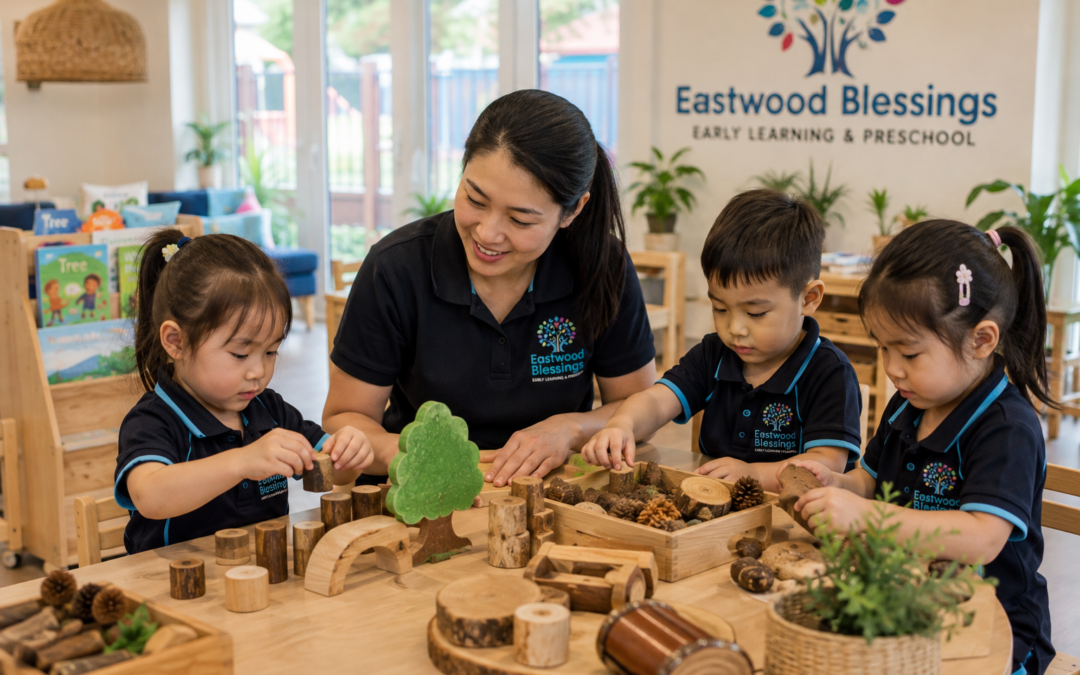
Your child does not always learn when you expect them to. Sometimes, a simple question at lunchtime, a disagreement over a toy, or a failed attempt to build a tower can become a meaningful learning moment. An Early Learning Centre can give you the kind of everyday environment where these moments are noticed, supported, and turned into opportunities for your child to think, communicate, and try again.
Why Do Unexpected Learning Moments Matter?
You may notice your child learning something new in the middle of an ordinary activity.
You might see your child counting pieces while building a road, asking why one object floats while another sinks, or figuring out how to share materials with another child. You may not have planned a lesson around any of these moments, but your child is still learning.
This is where responsive learning can make a difference. Instead of expecting your child to learn only during planned activities, you can give your child space to follow questions and interests as they appear.
A small question such as, “Why did it fall?” can lead to a conversation about balance, weight, shape, and what might happen if your child tries again.
How Can Play Turn an Ordinary Moment Into Learning?
A Block Tower Can Become a Problem-Solving Challenge
You may watch your child build a tower that suddenly falls.
Your first instinct might be to help, but your child can learn more by having time to think about what happened. You can encourage your child to look at the blocks, change the arrangement, and try another approach.
Your child can make a choice, make a mistake, adjust the idea, and try again without needing every step planned.
A Cooking Activity Can Lead Somewhere Unexpected
You may begin with a simple cooking activity and suddenly find your child comparing quantities, talking about ingredients, or asking what will happen when the mixture changes.
Cooking can create natural opportunities for your child to practise basic maths and language skills. Eastwood Blessings includes cooking classes as part of its learning experiences, giving your child practical situations where these skills can appear naturally.
Your child may not realise that measuring, counting, naming ingredients, and following steps are learning activities. That is part of what makes these experiences meaningful.
What Happens When Your Child’s Curiosity Changes Direction?
Your Child Does Not Have to Follow One Fixed Path
You might begin an activity with one idea, but your child may suddenly become curious about something completely different.
Perhaps your child notices a leaf outside and starts asking questions about insects. Maybe your child becomes fascinated by shadows instead of joining the original activity. A responsive educator can listen to that interest and use it as a starting point for further conversation.
A spacious outdoor area gives your child plenty of room to run, play, get creative, and notice the little things happening around them.
Your child can move between active play, quiet observation, social interaction, and hands-on experiences as interests change.
How Can Educators Support Learning Without Taking Over?
You may want your child to become more independent, but independence does not mean being left alone to figure everything out.
Your child can benefit when an educator stays nearby, listens carefully, asks a useful question, or offers just enough support to help your child continue.
For example, if your child struggles to connect two materials during a STEAM activity, an educator might ask what your child has already tried. That simple question can encourage your child to think instead of immediately waiting for an answer.
The learning approach follows the Early Years Learning Framework, helping your child build a sense of identity, connect with others, develop wellbeing, grow as a learner, and communicate with confidence. Activities can also be shaped around your child’s interests, abilities, and individual pace.
Why Can Smaller Numbers Make These Moments Easier to Notice?
You may find that your child’s quieter moments are just as important as the obvious ones.
A child who rarely speaks during a large group activity may suddenly share an idea while working beside one or two other children. A child who usually gives up quickly may stay with a puzzle because an educator has noticed the effort and offered calm encouragement.
Eastwood Blessings operates as a 21-place centre per day and describes its staffing as above ratio, allowing educators to focus closely on individual needs.
That individual attention can help you feel that your child’s questions, interests, frustrations, and small achievements are being noticed rather than lost in the day.
How Can Movement Help Your Child Learn in Unexpected Moments?
Learning Does Not Always Mean Sitting at a Table
Your child can learn through movement too.
During yoga, dance, or stretching, your child can practise following instructions, controlling movements, developing body awareness, and becoming comfortable trying something unfamiliar.
Yoga and dance sessions can give your child a chance to move, have fun, build confidence, and enjoy some quiet time through simple physical and relaxation activities.
You may notice your child gradually becoming more willing to participate, copy a movement, wait for a turn, or simply enjoy moving without worrying about getting everything right.
How Can STEAM Activities Encourage Your Child to Keep Asking Questions?
Your child’s first idea does not need to be the final answer.
A simple building challenge can lead to questions about shapes. A water activity can lead to questions about floating. A creative project can lead your child to experiment with different materials.
STEAM learning at Eastwood Blessings focuses on creativity, problem-solving, collaboration, engagement, and motivation.
You can give your child valuable space to test an idea, notice what happens, and decide what to try next.
FAQs
1. What does unexpected learning look like for your child?
It can happen during play, conversations, cooking, outdoor activities, creative work, or social interactions. Your child’s spontaneous question or action can become a useful learning opportunity.
2. Can play support problem-solving skills?
Yes. When your child builds, sorts, creates, tests, changes, and tries again, your child can practise thinking through problems in a natural way.
3. How can educators respond when your child’s interest changes?
An educator can listen to your child’s question or observation and use it as a starting point for discussion, experimentation, or another activity.
4. Can outdoor play support learning?
Yes. Outdoor experiences can give your child opportunities to move, observe nature, communicate with others, experiment with materials, and develop ideas through hands-on experiences.
5. Why are tailored learning experiences useful?
Your child has individual interests, strengths, preferences, and ways of approaching new experiences. A tailored approach gives your child opportunities to participate in ways that feel meaningful.
6. Can everyday activities support school readiness?
Yes. Activities such as cooking, building, talking, creating, moving, sharing, and solving problems can help your child practise communication, independence, concentration, cooperation, and early thinking skills.
7. What makes a learning moment memorable for your child?
Your child is more likely to connect with an experience when it relates to something your child is genuinely curious about. A question, mistake, new finding, or small success can become the moment that keeps an idea going.