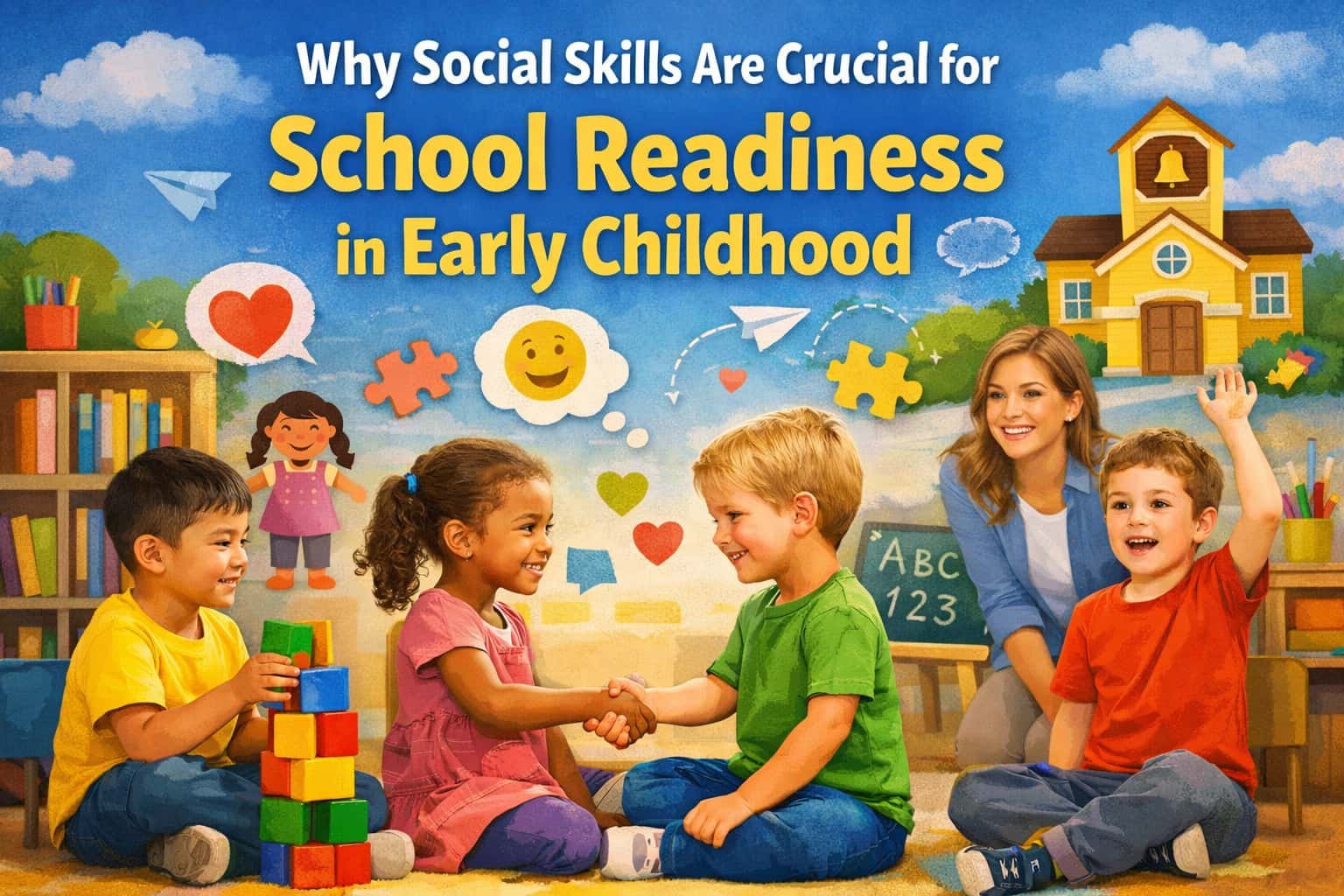

Social skills are a part of school readiness skills since they essentially enable kids to regulate their emotions, obey the classroom rules, communicate with the teachers and classmates, and be at their learning activity level on the first day confidently.
Those kids who develop strong social skills in early childhood are those who easily adjust to school routines, form good relationships, and learn actively; thus, their formal education is a smooth transition, and they are successful at it.
This is the reason educators and early learning experts focus heavily on the importance of social skills in early childhood, especially social-emotional learning in communities Eastwood Blessings Early Learning and Preschool.
Understanding School Readiness in Early Childhood
School readiness is a broad concept that goes beyond just recognizing letters or numbers. It includes a child’s social and emotional competence, which contributes to children’s ability to adapt to the school environment.
Preparatory students generally exhibit the following traits:
- They display confidence in unfamiliar settings
- They show the ability to get along with other kids
- They perform basic tasks independently
- They have emotional strength
- They’re excited to join in.
Focusing on social skills helps kids learn better in school and grow as people.
Why Social Skills Are Essential for School Success
Children spend large parts of their school day developing social skills in early childhood, interacting with others. The importance of social skills in early childhood lies in helping children:
- Follow classroom routines
- Respect other children and teachers
- Work well in groups
- Express feelings in appropriate ways
- Solve minor conflicts peacefully
Having these skills is as important as knowing your ABCs when you’re starting school.
How Social Skills Support Emotional Development in Preschoolers
Emotional development in preschoolers‘ age is largely about feeling and reacting to one’s emotions appropriately. In fact, the two aspects of development, emotional and social, are so interrelated that one needs to be developed through the other.
Children, when involved in social interactions, learn to:
- Identify emotions not only in themselves but also in other people
- Through words, communicate feelings
- Develop qualities such as patience and empathy
- Handling those bummed-out feelings.
With these skills, kids can jump into class stuff and make friends because they feel secure and like others get them.
Core Social Skills That Build School Readiness
Early childhood programs focus on teaching some of the social skills which are the very essential components of school readiness skills:
1. Communication Skills
Effective communication helps children:
- Explain what they need
- Ask questions
- Share ideas
- Follow instructions
Strong communication increases confidence and helps children participate more fully in classroom discussions.
2. Listening and Attention
Listening skills contribute to children:
- Getting the teacher’s instructions
- Being engaged in the activities
- Doing the usual stuff.
These skills are super important for kids to hit their growth goals and feel good about joining in at school.
3. Cooperation and Teamwork
In school environments, children need to be taught the following skills:
- Take turns
- Share materials
- Work in teams
Also, skills that reduce disagreements help kids feel like they’re part of the group.
4. Emotional Regulation
Learning to handle emotions is vital for:
- Staying calm during transitions
- Managing frustration
- Participating in group learning
Keeping your emotions in check can help you focus and behave well in class.
Emotional control boosts focus and supports healthy classroom behaviour.
5. Independence and Responsibility
Children who are ready for school can:
- Complete simple tasks independently
- Clean up after activities
- Manage personal belongings
- Follow predictable routines
Independence builds confidence and pride.
The Role of Social-Emotional Learning in Eastwood
Social-emotional learning in Eastwood centres, for example, at Eastwood Blessings Early Learning and Preschool, is geared towards helping children develop emotional awareness and social competence during their daily learning. These programs assist children:
- To recognize social signals
- To communicate feelings in words
- To make friends
- To cooperate in groups
When such skills are combined, early childhood education programs foster not only social skills but also emotional development. (eastwoodblessings.com.au)
For more on how child development and reflection practices are learning-supportive, see Building Bonds Through Meaningful Childcare Practices.
Benefits of Social Skills in Early Childhood
Having good social skills when you’re really young helps you out way past just your first day at school.
Short-Term Benefits
- Smooth transition into school
- Better classroom behaviour
- Less worry about school.
- Better connections with friends and grown-ups.
Long-Term Benefits
- More involved in school.
- Feeling better mentally.
- Better at fixing stuff.
- Greater resilience and adaptability
Social Skills and Their Impact on School Readiness
| Social Skill | Impact on School Readiness |
| Communication | Helps children express needs and understand instructions |
| Emotional regulation | Supports calm behaviour in group settings |
| Cooperation | Improves teamwork in activities |
| Listening | Helps follow teacher directions |
| Empathy | Encourages friendships and positive relationships |
Early Learning Milestones Related to Social Skills
Kids usually hit certain learning goals as they grow.
Milestones before school:
- Playing with others
- Taking turns without conflict
- Expressing feelings clearly
- Accepting rules and changes
- Handling little jobs myself.
Meeting these early learning goals gets kids ready for school.
Signs a Child May Need Support With Social Skills
Some children may benefit from extra guidance. Signs include:
- Difficulty sharing
- Frequent outbursts
- Avoiding playgroups
- Trouble following routines
- Limited communication
Getting kids help early keeps them interested and feeling good about themselves.
Early Learning Environments That Support Social Growth
High-quality early learning programs:
- Encourage group play
- Stick to routines to make life more predictable.
- Expand your emotional vocabulary.
- Provide positive reinforcement
Here is an example of how the preschool program at Eastwood Blessings Early Learning and Preschool encourages social and emotional growth together with literacy and numeracy. (eastwoodblessings.com.au)
Feel like checking out the entire childcare and preschool programs in Eastwood? Go to The Ultimate Guide to Childcare in Eastwood.
Educators’ Role in Building Social Skills
Teachers and early childhood educators support children by:
- Modeling respectful communication
- Leading group activities.
- Instructing on methods to resolve disagreements.
- Promoting understanding.
Engaging in these routines each day can help to develop assurance and skill in social situations.
How Parents Can Support Social Skills at Home
Parents also play a key role:
- Suggest arranging playdates with friends.
- Talk about feelings daily
- Introduce simple routines
- Praise cooperative behaviour
- Read books that explore emotions and friendships
These practices align with school routines and boost children’s confidence.
Home vs Early Learning Support for Social Skills
| Environment | Social Skill Focus |
| Home | Emotional support and routine |
| Early learning centre | Group interaction and cooperation |
| Community playgroups | Peer engagement |
| Preschool programs | Structured social skill learning |
Importance of Local Early Learning Support in Eastwood
Local early childhood services such as Eastwood Blessings Early Learning and Preschool are very aware of the community’s needs and are always ready to help families support children’s growth. These childcare services have been planned in such a way as to facilitate the development of all aspects of the child and thus, not be confined to merely academics. (Local Business Guide)
How Social Skills Prepare Children for Classroom Expectations
School classrooms require children to:
- Sit through group activities
- Follow daily routines
- Respect peers and teachers
- Focus on learning with a clear goal.
Social readiness helps kids handle expectations with calm and confidence.
Long-Term Impact of Strong School Readiness Skills
Children with strong social foundations are more likely to:
- Have fun learning.
- Get involved.
- Build lasting friendships
- Handle difficulties with strength.
When families and teachers prioritize social skills from the start, they give children a solid base for later success.
Why Social Skills Should Be Prioritised Early
Academic learning accelerates when social foundations are strong. Social skills:
- Improve classroom focus
- Support better behaviour
- Build confidence
- Promote learning among colleagues.
That’s why good social skills are so important when kids are young.
Key Takeaways
- Social skills are essential school readiness skills
- Emotional development supports learning
- Social-emotional learning improves confidence
- Early learning milestones include social growth
- Social skills benefit children now and long term
FAQs
- Why are social skills important for school readiness?
Social skills help children follow routines, manage emotions, and interact confidently in a classroom setting. - How do social skills support early childhood development?
They strengthen emotional control, communication, and relationship-building, which supports overall learning. - What social skills should children have before starting school?
Children should be able to communicate needs, take turns, listen, and manage basic emotions. - Can social skills be taught in early learning centres?
Yes, structured early learning programs actively develop social and emotional skills through guided activities. - How does emotional development affect school readiness?
Emotional development helps children cope with change, stay focused, and engage positively in learning. - How can parents support social skills at home?
Parents can encourage play, talk about emotions, and follow simple daily routines.
Final Summary
School readiness refers to getting children ready for actual classroom experiences, and it is not merely about academics. Solid social skills help kids talk to each other, handle feelings, and form friendships, all important for doing well in school. Eastwood parents and teachers can get kids ready to learn by teaching them about emotions and helping preschoolers grow emotionally. When kids have good social skills early on, they get a great head start in school and in life.