
When you’re looking at all the things your kid needs to learn, it’s easy to focus on the basics,like teaching them their colors or finally getting them to use the potty without a struggle. But honestly, the real MVP of development is just learning how to vibe with people. We’re talking about social skills in early childhood, and they’re basically the foundation for everything else. Whether it’s figuring out how to share a shovel in the sandpit or learning how to join a game without a total meltdown, these early social skills are the foundation for how they’ll handle life later on.
It’s easy to assume kids just “get” how to be social, but it’s actually a whole learning process. They’re basically tiny scientists trying to crack the code of human interaction. Developing social skills in early childhood isn’t just about being “polite”, it’s about empathy, reading the room, and knowing how to bounce back when things don’t go their way. While you’re their first teacher at home, a solid childcare spot is like a high-speed trainer because it puts them in real-world situations with other kids every single day.
Why the social hype is actually real
If you’ve ever hung out with a group of toddlers, you know it can be pure chaos. One kid is crying over a blue truck, another is staring at a bug, and someone else is trying to eat a crayon. It looks like a mess, but this is where the magic happens. The importance of social skills in early childhood is huge because these are the same skills they’ll use to work in teams, handle drama, and build real friendships as adults.
Research from the Australian Institute of Family Studies shows that these early social and emotional connections are what actually predict how well a kid does when they finally hit big-school. Kids who get a handle on how to interact early tend to be way more confident and handle stress much better. They aren’t just playing; they’re figuring out how to exist in a world full of other people.
How to build social skills in early childhood through play
Play isn’t just a way to kill time before a nap; it’s the “work” of being a kid. When they play, they’re constantly negotiating. “I’ll be the doctor, you be the patient,” or “Let’s build a castle.” These moments are a total masterclass in building social skills in early childhood.
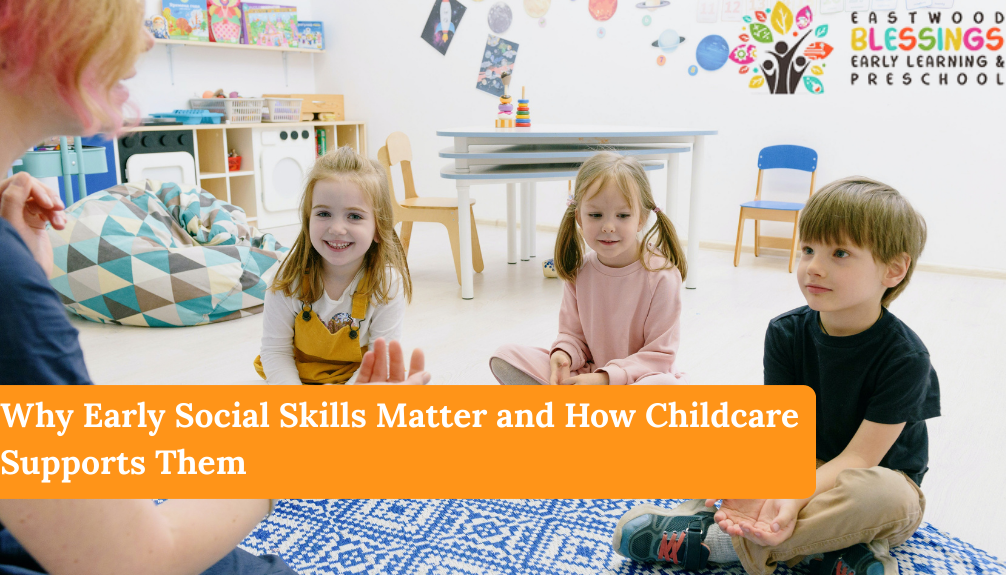
In a childcare setting, this kind of thing happens naturally. Educators set up vibes where kids have to work together. Maybe they’re tackling a massive floor puzzle or building a pillow fort. In these moments, they’re picking up:
- Cooperation: Realizing the tower goes higher when two people help.
- Negotiation: Figuring out who gets the red bucket first without a fight.
- Empathy: Noticing when a friend is sad because their blocks fell and actually trying to help.
The massive benefits of social skills in early childhood
The perks of being socially savvy start early and last forever. One of the biggest benefits of social skills in early childhood is emotional regulation. When a kid can actually say “I’m frustrated” instead of just throwing a toy across the room, that’s a massive win. It leads to way fewer meltdowns and much better days for everyone involved.
Other perks include:
- Better communication: They learn to use words to get what they need.
- Pure confidence: Feeling like they “fit in” makes them brave enough to try new things.
- Problem-solving: They start finding creative ways to settle beef without an adult jumping in every five seconds.
Quality early learning centers focus on this. Groups like Early Childhood Australia emphasize that these early interactions are what help kids develop a sense of who they are. When a child feels like they belong to a community, they’re much more likely to engage with the world positively.
The childcare advantage
Childcare is basically a social gym. It provides a structured but fun space where kids are constantly dealing with different personalities. Unlike at home, where they might be the only child or only have siblings to deal with, childcare introduces them to a whole mix of peers.
This exposure is key for developing social skills in early childhood because it teaches them that everyone is different. They learn that some friends like to be loud, while others need quiet time. This kind of flexibility is a massive life skill. Plus, educators aren’t just watching from the sidelines; they’re coaching. When a conflict happens, they don’t just take the toy away. They guide the kids through the conversation so they actually learn for next time.
Modeling the vibe at home
While childcare does a lot, you’re still the main influencer. Kids watch every move you make. If you handle a disagreement with your partner or a neighbor calmly, they see that. If you use “please” and “thank you” naturally, they’re going to copy that energy.
You can also practice these skills through simple games. Board games are great for learning how to lose without a tantrum (which is a high-level social skill, let’s be real). Even just having “conversations” during dinner where everyone gets a turn to speak helps them learn the rhythm of social interaction.
Final thoughts on the social journey
Helping your child master these early social skills is one of the best things you can do for them. It’s not about making them the most popular kid in the room; it’s about giving them the tools to feel comfortable and respected in any situation.
When you see them finally share that blue truck without being asked, or run up to a new kid and ask them to play, you’ll know all that practice is paying off. If you want a place that really prioritizes this, you should definitely check out Eastwood Blessings Early Learning Centre. They’re all about creating a supportive vibe where kids can learn to deal with the social world through play, creativity, and genuine connection.
Frequently Asked Questions
Why is it important for my kid to socialize early? It builds the brain’s pathways for empathy and communication, which are the basis for everything they do later.
What if my child is shy? That is totally fine! Every kid has their own pace, and childcare gives them a safe spot to observe until they’re ready to dive in.
How does childcare help with sharing? It puts them in a group where sharing is just part of the daily routine, so it becomes a habit rather than a chore.
Can social skills help with school later? For sure. Kids who get along with others find it way easier to focus on learning once they actually start school.
What are signs of good social skills? Look for them showing concern for a sad friend or using their words to solve a problem instead of just reacting.