
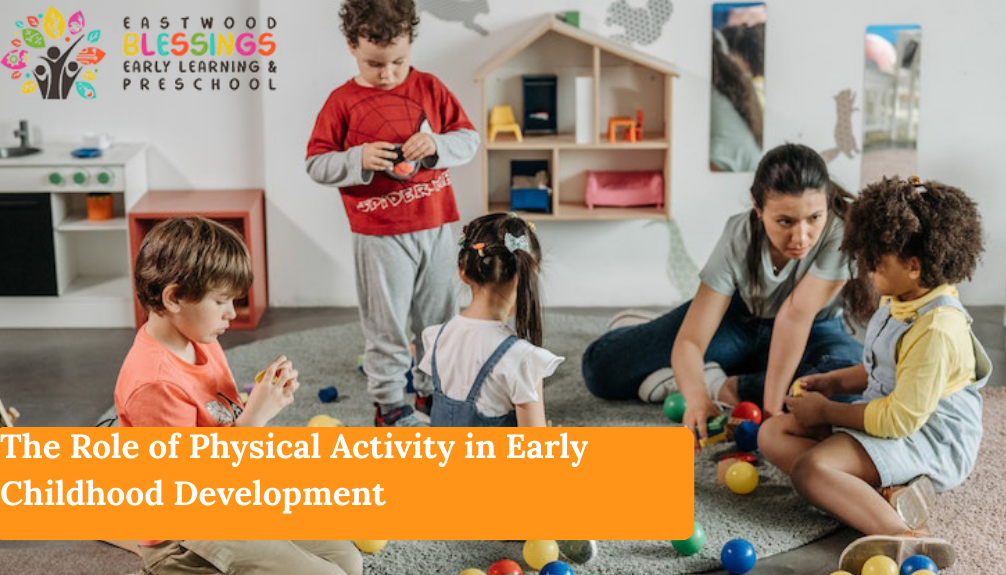

Physical activity plays a crucial role in shaping a child’s overall growth and development. During early childhood, every movement, from crawling to running, contributes to physical, cognitive, and social milestones. Understanding the importance of physical activity for preschoolers can help parents, educators, and caregivers nurture healthy, well-rounded children.
At Eastwood Blessings, we emphasize the connection between active play and early learning, supporting children’s holistic development from a young age.
Understanding Physical Development in Early Childhood
What Is Physical Development in Early Childhood?
Physical development refers to the growth of a child’s body and the improvement of motor skills. This includes both gross motor skills, like walking, running, and jumping, and fine motor skills, such as holding a pencil, drawing, or manipulating small objects.
During early childhood, physical growth in early childhood is rapid. Muscles strengthen, coordination improves, and children gain better control over their movements. Supporting this growth through regular physical activity ensures children reach their developmental milestones on time.
Engaging children in toddler development activities can help strengthen both gross and fine motor skills while also supporting emotional development during childhood.
Stages of Physical Development
- Infancy (0-12 months): Rolling, crawling, sitting, and early walking.
- Toddlerhood (1-3 years): Running, climbing, stacking blocks, basic coordination.
- Preschool (3-5 years): Refinement of gross and fine motor skills, more complex play.
Providing age-appropriate physical activities for preschoolers and nursery-aged children is essential to support these stages. This also helps with settling into childcare, as active play allows children to build confidence and familiarity in new environments.
Importance of Physical Activity for Preschoolers
Enhancing Motor Skills
Active play and structured exercises help children develop balance, strength, and coordination. Whether it’s a simple game of tag or an obstacle course, these activities stimulate both gross and fine motor skills, contributing to overall physical development for early childhood.
Incorporating art activities for 4 year olds or other creative tasks can also improve fine motor skills while engaging children in fun learning experiences.
Supporting Cognitive and Social Development
Physical activity isn’t just about the body, it also boosts the brain. Movement improves concentration, memory, and problem-solving skills. Group activities encourage sharing, teamwork, and communication, highlighting the benefits of physical activity in childhood beyond physical health.
These activities are particularly effective for improving social skills in early childhood, helping children form friendships and collaborate with peers.
Promoting Emotional Well-being
Engaging in regular physical activity helps children release energy and manage emotions. Activities like dancing or outdoor play can reduce stress, increase confidence, and foster a positive attitude towards learning and social interaction. Active participation in play-based programs like play-based learning Australia further supports building confidence in children.
Types of Physical Activities for Early Childhood
Indoor Physical Activities
Indoor activities can be just as effective for physical development for early childhood. Examples include:
- Stretching exercises
- Dancing to music
- Indoor obstacle courses
- Hand-eye coordination games
These activities are especially useful during bad weather or when outdoor space is limited. Incorporating early childhood and technology in moderation, such as interactive movement apps, can complement indoor play without replacing physical activity.
Outdoor Physical Activities
Outdoor play is vital for preschoolers. Running, climbing, and ball games promote physical activity for preschoolers, allowing them to develop endurance, strength, and spatial awareness. Regular exposure to outdoor activities also encourages a love for nature and exploration.
Structured vs. Unstructured Play
- Structured play: Organized activities like mini-sports or guided exercises.
- Unstructured play: Free play that allows creativity and self-expression.
A combination of both is essential to ensure children enjoy movement while developing key skills. Programs focused on play-based learning Australia use this combination effectively to promote holistic growth.
Benefits of Physical Activity in Early Childhood
Physical Health Benefits
Regular activity improves muscle strength, coordination, balance, and cardiovascular health. Engaging in physical activities for nursery and preschool ensures steady physical growth in early childhood.
Cognitive Benefits
Movement stimulates brain development. Children who are active often show better focus, memory retention, and problem-solving abilities. Encouraging toddler development activities supports both physical and cognitive growth.
Social and Emotional Benefits
Active play teaches cooperation, patience, and emotional regulation. Children learn to manage success and failure, fostering resilience and confidence. These are significant benefits of physical activity in childhood that extend beyond the playground. Such activities also support emotional development during childhood and strengthen social skills in early childhood.
Tips for Parents and Educators
Encouraging Daily Physical Activity
- Establish routines that include at least 60 minutes of active play.
- Limit screen time to ensure children engage in movement.
- Provide safe spaces for play both indoors and outdoors.
Creating Engaging Activities
- Use music, games, and challenges to make exercise fun.
- Rotate activities to maintain interest and motivation.
- Include art activities for 4 year olds and other creative tasks to combine movement with learning.
Monitoring Progress and Milestones
- Observe gross and fine motor skill improvements.
- Celebrate achievements to boost confidence and build confidence in children.
- Adapt activities based on the child’s age and abilities to maximize physical development for early childhood.
Common Challenges and How to Overcome Them
- Limited Space: Use small-scale indoor activities like dance or stretching.
- Safety Concerns: Ensure play areas are child-proof and supervised.
- Lack of Interest: Incorporate favorite games, music, or themes to motivate children.
Even small changes can make a big difference in promoting physical activity for preschoolers and supporting settling into childcare.
Conclusion
Physical activity is a cornerstone of early childhood development. From improving physical growth in early childhood to enhancing cognitive, social, and emotional skills, active play provides lifelong benefits. Integrating structured and unstructured activities, along with creative tasks and play-based learning, supports building confidence in children and overall wellbeing.
At Eastwood Blessings, we are dedicated to nurturing every child’s growth through purposeful, engaging, and fun activities that lay the foundation for a healthy, happy future.
FAQs
- What are the key stages of physical development in early childhood?
Infancy, toddlerhood, and preschool years, each with specific gross and fine motor milestones. - How much physical activity do preschoolers need daily?
At least 60 minutes of structured and unstructured play each day. - What are the best physical activities for nursery children?
Simple activities like stretching, dancing, obstacle courses, and playground games. - How does physical activity benefit cognitive development in young children?
It improves concentration, memory, problem-solving skills, and overall brain growth. - Can indoor activities support physical development for early childhood?
Yes, indoor activities like dancing, stretching, hand-eye coordination games, or interactive apps related to early childhood and technology can effectively promote development.