
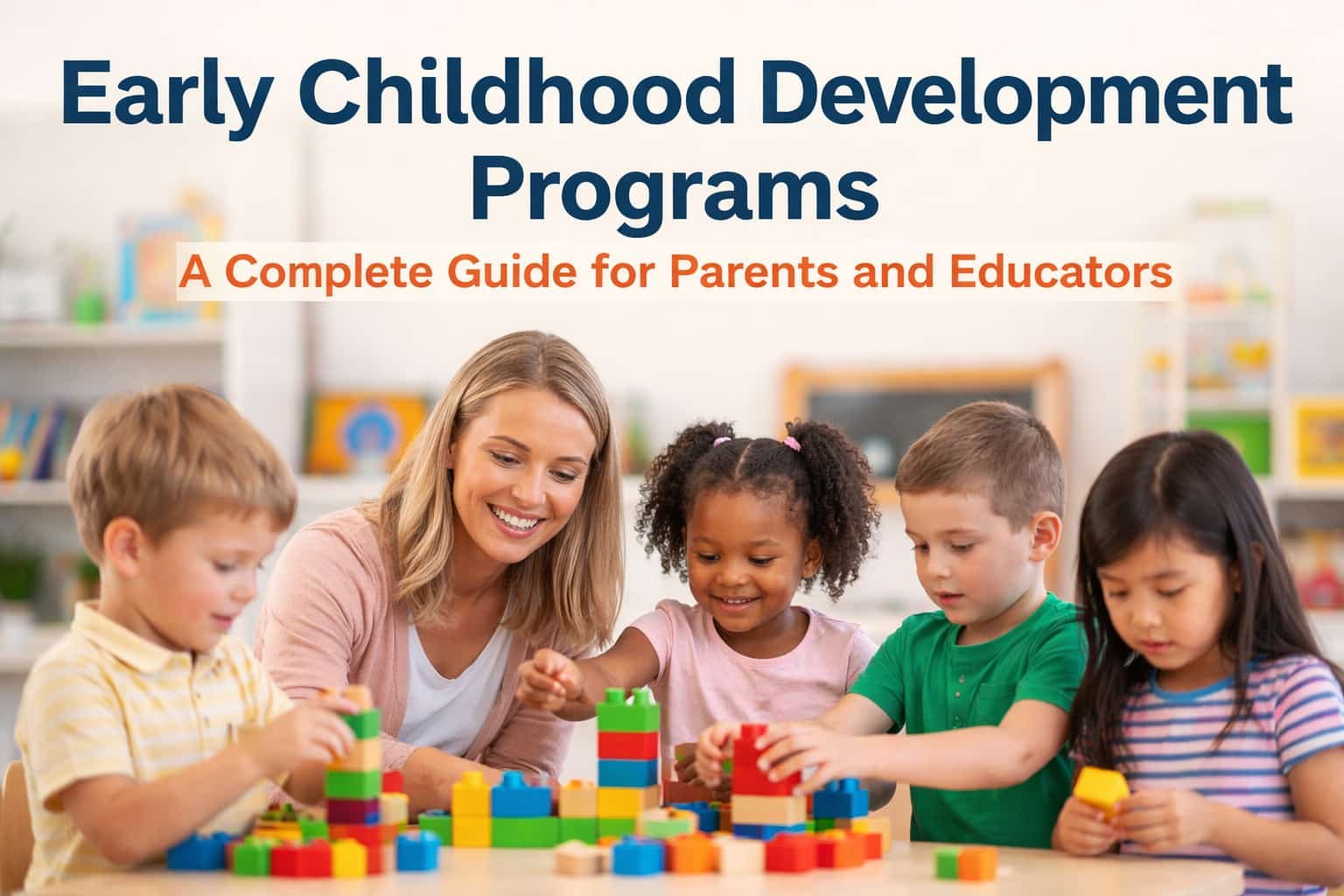

Early childhood is a critical period where children undergo rapid mental, physical, emotional, and social growth. Participating in structured early childhood development programs provides a nurturing environment that supports holistic development, preparing children for school and life.
Key Benefits:
- Enhanced cognitive and language skills
- Improved social-emotional growth
- Physical development and motor skill improvement
- Early preparation for academic success
Investing in quality early childhood programs can set a child on a path to lifelong learning and success.
In this guide, we’ll explore the types, benefits, and best practices of early childhood programs, backed by research and practical examples.
What Are Early Childhood Development Programs?
Early childhood development programs are structured initiatives designed to promote learning and growth in children from birth to five years. These programs combine educational activities, play, and social interaction to foster holistic development.
Types of Early Childhood Development Programs
| Program Type | Age Group | Key Features |
| Preschool / Pre-K | 3–5 years | Structured curriculum, early literacy, social skills |
| Montessori / Play-Based Centers | 2–6 years | Child-led learning, hands-on activities, critical thinking |
| Community Programs | 0–5 years | Parent-child workshops, outdoor learning, sensory play |
| Family Daycare Programs | 0–5 years | Small groups, individualized attention, nurturing environment |
Learn more about social-emotional development in early childhood.
Pro Tip: Choosing a program that aligns with your child’s learning style and temperament maximizes growth outcomes.
Mental Development in Early Childhood
Mental growth is the foundation for cognitive and problem-solving skills. High-quality programs focus on stimulating the brain through interactive, age-appropriate activities.
Activities Supporting Mental Development
- Puzzles, memory games, and sequencing activities
- Storytelling and comprehension exercises
- Creative problem-solving tasks
- Sensory exploration (textures, sounds, colors)
Benefits:
- Improved attention and focus
- Enhanced memory and recall
- Early reasoning and logic development
“Engaging children in fun, educational games strengthens their mental development in early childhood while making learning enjoyable.”
Physical Development in Early Childhood
Physical growth in our programs incorporates daily activities to enhance coordination, strength, and overall health.
Examples of Physical Activities
- Play-based Learning
- Outdoor playground games (running, climbing)
- Ball games and obstacle courses
- Arts & crafts for fine motor skill development
- Yoga and stretching sessions
Tip: Regular physical activity improves not only motor skills but also brain development and concentration.
Social Development in Early Childhood
Social skills are critical for peer interaction, teamwork, and empathy. Programs create opportunities for collaborative play, conflict resolution, and communication practice.
Strategies to Foster Social Development
- Group projects and shared tasks
- Role-playing and pretend play scenarios
- Structured “circle time” discussions
- Peer mentoring and buddy systems
Benefits:
- Improved communication and confidence
- Enhanced problem-solving with peers
- Positive relationships with teachers and classmates
Developing social skills in early childhood sets the stage for lifelong interpersonal success.
Emotional Development in Early Childhood
Emotional growth teaches children self-awareness, regulation, and empathy. Programs include activities that help children identify feelings and respond appropriately.
Emotional Development Activities
- Storytelling to explore emotions
- Mindfulness exercises (breathing, calm time)
- Group discussions about feelings
- Positive reinforcement and reward systems
Key Takeaway: Emotional intelligence learned early reduces anxiety and improves social relationships.
Language and Cognitive Development
Language and cognition are intertwined. Programs enhance vocabulary, comprehension, and communication, while cognitive activities boost memory, attention, and reasoning.
Examples of Language & Cognitive Activities
- Reading aloud and interactive storytelling
- Vocabulary games and rhymes
- Sorting, counting, and pattern recognition
- Science experiments and sensory exploration
Benefits:
- Stronger communication skills
- Early literacy and numeracy readiness
- Enhanced curiosity and problem-solving
Focusing on both language development in early childhood and cognitive growth ensures a strong foundation for school.
Brain Development in Early Childhood
The first five years are critical for brain development, forming neural connections that influence lifelong learning. Early childhood programs stimulate the brain through play, interaction, and guided learning.
Brain Development Activities
- Music, rhythm, and movement exercises
- Puzzle solving and sequencing games
- Interactive storytelling and role-play
- Collaborative play that encourages critical thinking
Key Insight: Engaging environments with diverse experiences enhance early childhood brain development.
Benefits of Early Childhood Development Programs
Structured programs provide holistic advantages that influence a child’s future success.
Top Benefits:
- Academic Preparedness – Early literacy and numeracy skills
- Emotional Stability – Confidence, self-regulation, resilience
- Social Confidence – Communication, cooperation, empathy
- Cognitive Growth – Critical thinking, memory, problem-solving
- Physical Health – Motor skills, coordination, fitness
| Benefit Area | Key Outcomes |
| Cognitive | Problem-solving, attention, memory |
| Emotional | Self-awareness, resilience, empathy |
| Social | Communication, teamwork, conflict resolution |
| Physical | Gross/fine motor skills, fitness |
| Academic | Early literacy and numeracy readiness |
Children in high-quality programs consistently show stronger performance in school and social environments.
FAQs
Q1: What age should children start early childhood development programs?
A: Usually between 0–5 years, depending on developmental readiness.
Q2: How do programs enhance brain development in early childhood?
A: Through play-based learning, social interaction, and hands-on activities that stimulate neural connections.
Q3: Can parents support development at home?
A: Absolutely! Reading, creative play, outdoor activities, and discussions reinforce learning from programs.
Q4: What makes a program high-quality?
A: Qualified educators, safe and nurturing environments, holistic curricula addressing mental, physical, emotional, and social growth.
Q5: What are the long-term benefits?
A: Stronger academic performance, emotional resilience, social skills, and lifelong cognitive development.
Conclusion
Eastwood Blessings early childhood development programs are essential for nurturing the next generation. By promoting mental, physical, social, emotional, language, and cognitive growth, these programs create a foundation for academic success, social competence, and lifelong well-being.
Investing in a high-quality early childhood program is one of the most impactful decisions parents can make.