
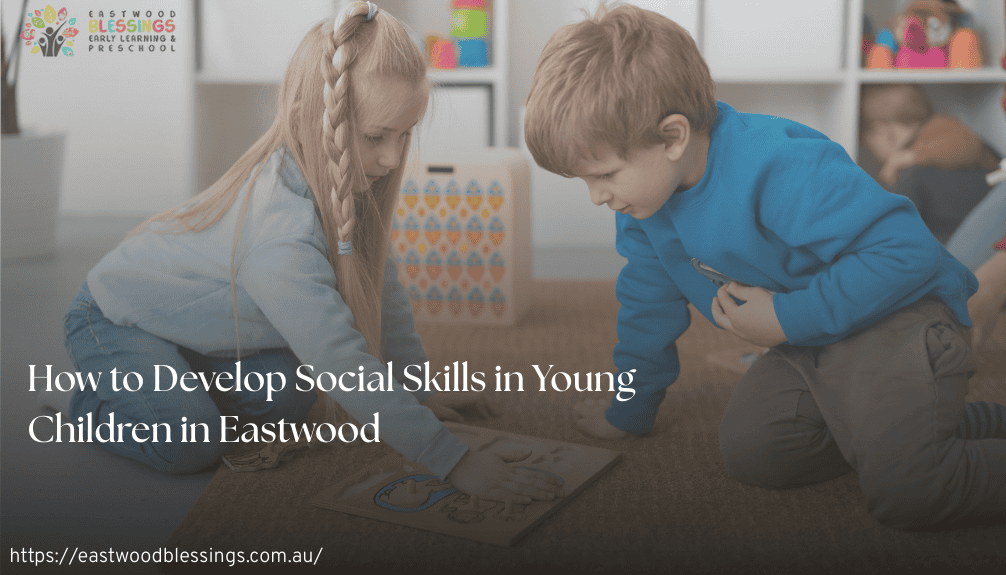
Developing social skills in young children is one of the most important foundations for lifelong learning and emotional well-being. For families living in Eastwood, where children grow up surrounded by schools, early learning centres, and a vibrant local community, strong social skills help children feel confident, connected, and ready to succeed.
From learning how to share and communicate to building friendships and emotional awareness, developing social skills plays a vital role in early childhood development. With the right support at home and through quality early education programs, children in Eastwood can develop the social confidence they need to thrive.
Why Developing Social Skills Is Essential in Early Childhood
Social skills allow children to interact positively with others and navigate everyday situations. These skills include communication, emotional regulation, empathy, and cooperation.
Children who develop strong social skills early often show:
- Better emotional control
- Improved learning outcomes
- Healthier relationships
- Greater confidence in group settings
Research consistently shows that social development is closely linked with cognitive and emotional growth. This is why many early childhood development programs integrate social learning into daily routines.
You can learn more about holistic growth in early years in this guide on early childhood development programs.
Key Stages of Developing Social Skills for Children
Toddler Years (1–3 Years)
During toddlerhood, children begin learning through observation and imitation. At this stage, social development focuses on:
- Responding to familiar adults
- Expressing basic emotions
- Beginning simple interactions
High-quality toddler environments play a major role in this stage. Structured care settings like a toddler program in Eastwood, provide safe opportunities for guided interaction and emotional growth.
Preschool Years (3–5 Years)
Preschool is a critical period for developing social skills for children. Children begin to:
- Play cooperatively
- Share and take turns
- Communicate feelings using words
Play-based learning becomes especially important during this stage. Programs that focus on social interaction through play help children naturally learn teamwork and cooperation.
Read how play supports development in play-based learning.
Early School Years (5–7 Years)
As children prepare for school, social skills become more structured. They learn:
- Conflict resolution
- Group responsibility
- Listening and following rules
Social readiness is closely tied to school success. This article on why social skills are crucial for school readiness explains how early social learning supports smoother transitions into primary school.
Effective Ways to Encourage the Development of Social Skills
Positive Behavior Reinforcement
Positive behavior reinforcement is one of the most effective strategies for social learning. When children are praised for positive actions, they are more likely to repeat them.
Examples include:
- Praising children for sharing
- Acknowledging kind behavior
- Rewarding cooperation
Many high-quality childcare centres in Eastwood use positive reinforcement to guide children’s behavior in a supportive, non-punitive way.
Encouraging Teamwork and Cooperation
Group activities are essential for building teamwork and cooperation. These experiences teach children how to:
- Work toward shared goals
- Respect others’ ideas
- Resolve disagreements
Activities such as group art projects, storytelling, and outdoor play help children practice social interaction in a fun and natural environment. Centres that focus on play-based learning are especially effective in nurturing these skills.
Role-Playing and Communication Practice
Role-playing helps children rehearse real-life social situations. Parents and educators can act out scenarios such as:
- Asking for help
- Making friends
- Handling conflicts
This approach builds emotional awareness and strengthens communication skills in a safe setting.
Social Confidence Building Through Everyday Experiences
Social confidence building happens gradually through repeated positive interactions. Children need opportunities to engage with peers without pressure or fear of failure.
Parents in Eastwood can support this by:
- Visiting local parks and libraries
- Encouraging participation in community activities
- Supporting children during new social experiences
Quality early learning environments, such as a trusted childcare centre in Eastwood, also provide structured opportunities for confidence-building.
The Role of Early Learning Centres in Social Development
Early learning centres play a vital role in shaping children’s social behavior. Educators model respectful communication, guide group activities, and support emotional development.
A nurturing environment like an Eastwood early learning centre helps children feel safe, valued, and confident.
For families seeking long-day care, programs such as Eastwood’s leading long-day care and kindergarten offer consistent routines that reinforce social learning.
Benefits of a Social Skills Program for Children in Eastwood
Some children benefit from more structured support through a dedicated social skills program for children in Eastwood. These programs focus specifically on communication, emotional regulation, and group interaction.
Key benefits include:
- Small group sessions
- Individual progress monitoring
- Professional guidance
Programs integrated within early learning settings often align with broader educational frameworks like the EYLF. Learn more in A Complete Guide to the Early Years Learning Framework.
Common Social Challenges and How to Address Them
Shyness and Anxiety
Gradual exposure, encouragement, and positive reinforcement help children feel comfortable over time.
Difficulty Sharing
Guided group activities and consistent routines teach fairness and cooperation.
Emotional Outbursts
Teaching children to recognise and express emotions reduces frustration and improves self-control.
This topic is explored further in mental development in early childhood.
How Parents in Eastwood Can Support Social Skills at Home
Parents play a crucial role in reinforcing social development by:
- Encouraging conversation
- Modelling respectful behavior
- Setting clear boundaries
- Reading stories about emotions and friendships
Combining home support with quality early education leads to the strongest outcomes.
Preparing Children for School Through Social Development
Strong social skills help children transition smoothly into school. Children who are socially prepared are more likely to:
- Adapt to classroom routines
- Build friendships
- Participate confidently
This guide on understanding preschool readiness and social-emotional skills provides valuable insights for parents preparing their child for the next stage.
Frequently Asked Questions (FAQs)
- Why is developing social skills important for young children?
Developing social skills helps children communicate better, manage emotions, and build healthy relationships early in life. - At what age should children start developing social skills?
Social skills begin developing from infancy and become more structured during the toddler and preschool years. - How can parents support social skills development at home?
Parents can encourage conversation, model positive behavior, and use positive behavior reinforcement daily. - What activities help with teamwork and cooperation in children?
Group play, play-based learning activities, and guided games help children learn teamwork and cooperation naturally. - How does a social skills program help children in Eastwood?
A social skills program for children in Eastwood provides structured support to build communication, confidence, and peer interaction. - Can shy children improve their social confidence?
Yes, with gradual exposure, encouragement, and social confidence-building activities, shy children can gain confidence over time.
Conclusion
Developing social skills in young children is one of the greatest gifts parents and educators can provide. For families in Eastwood, access to supportive home environments, quality early learning centres, and structured social programs creates the ideal foundation for success.
Through positive behavior reinforcement, teamwork and cooperation, and intentional social confidence building, children learn how to connect, communicate, and thrive. Whether at home or through a trusted social skills program for children in Eastwood, early social development sets the stage for a confident and successful future.
