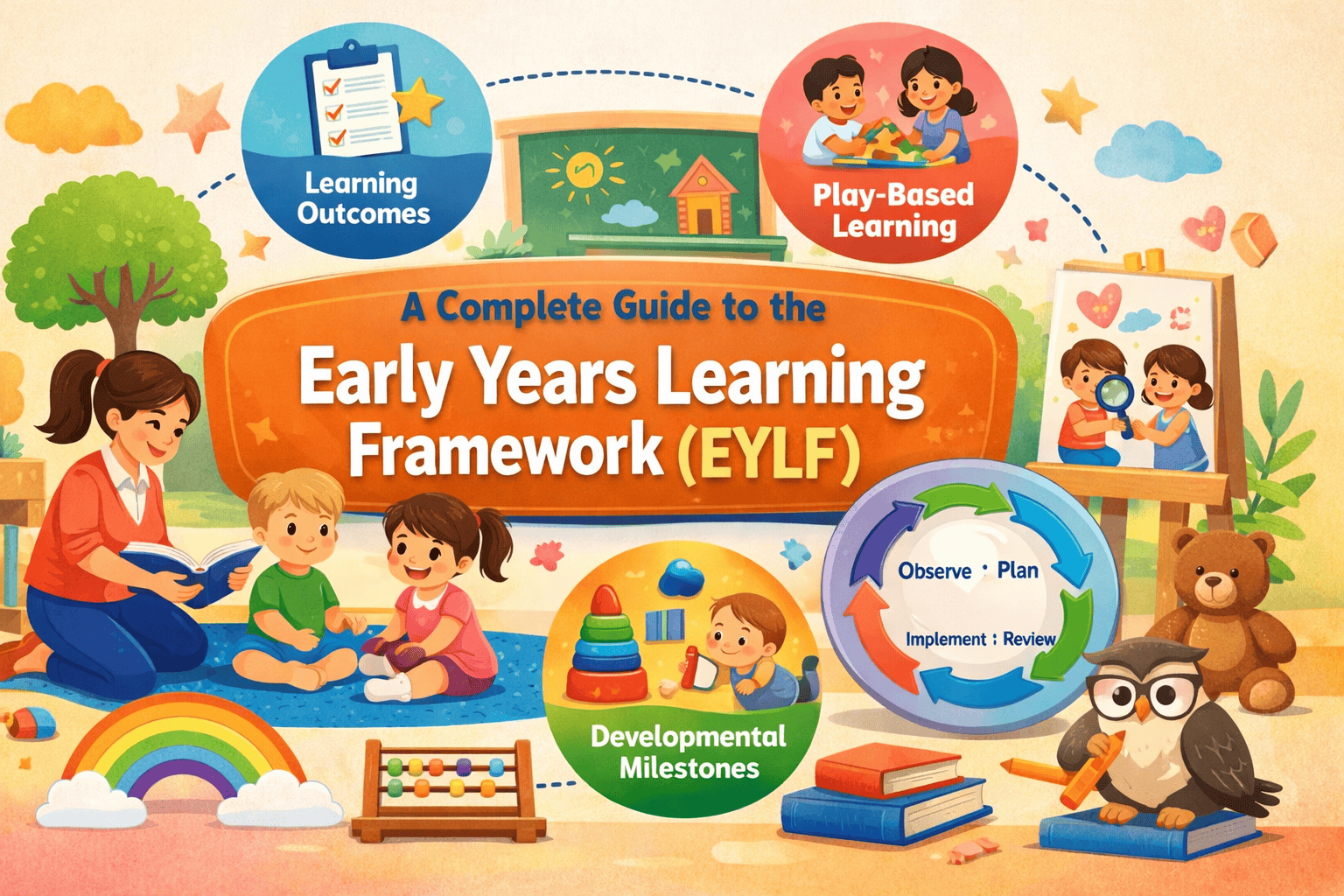

The early years learning framework is a crucial guide for early childhood education. It shapes the way educators and caregivers support children’s growth, development, and learning. Understanding what is eylf and how it works helps create meaningful experiences for children aged 0–5 years.
For more resources on early learning, visit our blog posts for practical ideas and activities.
The framework emphasizes play-based learning, curiosity, and exploration. It guides teachers and parents in nurturing children’s social, emotional, cognitive, and physical development.
What is the Early Years Learning Framework?
The early years learning framework is a national curriculum designed to support early years learning. It provides educators with a structured approach to guide children’s development.
The framework highlights how children learn through play, relationships, and hands-on experiences. It helps teachers understand developmental milestones and learning outcomes for different ages.
Learn more about our quality Eastwood early education for little learners programs to see EYLF in practice.
Key Aspects of EYLF
- Definition: A curriculum framework for children from birth to five years
- Purpose: Supports holistic development including cognitive, social, emotional, and physical growth
- History: Created to standardize early childhood education and encourage play-based learning
The framework bridges theory and practice. It ensures children receive consistent guidance and support in early learning environments.
Core Principles of the EYLF
The eylf framework focuses on principles that guide early years learning. These principles ensure learning is child-centered and inclusive.
- Secure, respectful, and reciprocal relationships help children feel safe and supported
- Partnerships with families create collaboration in children’s learning
- High expectations and equity encourage all children to reach their potential
- Respect for diversity acknowledges cultural and individual differences
- Ongoing learning and reflective practice improve teaching strategies
For tips on how educators implement these principles, check our childcare educator of Eastwood guide.
The EYLF Learning Outcomes
The early years learning framework outcomes describe what children should achieve through structured learning experiences. There are five key outcomes:
| Outcome | Description |
| Identity | Children develop a strong sense of self and belonging |
| Community | Children connect with and contribute to their world |
| Wellbeing | Children have a strong sense of health and wellbeing |
| Learning | Children are confident, involved, and curious learners |
| Communication | Children are effective communicators using language, symbols, and texts |
Educators can use these outcomes to guide activity planning and assessment. Each outcome provides a focus for nurturing skills and abilities in children. Learn more from our play-based learning page for ideas.
EYLF Planning Cycle
The early years learning framework planning cycle is a step-by-step guide for educators to implement the framework effectively. The cycle includes observing, planning, implementing, and reviewing learning activities.
- Observe: Monitor children’s skills, interests, and interactions
- Plan: Design learning experiences that support development
- Implement: Carry out activities aligned with learning outcomes
- Review: Evaluate effectiveness and adjust plans as needed
Visual Example: Planning Cycle
Observe → Plan → Implement → Review → Observe (continuous)
Using this cycle ensures that learning is dynamic and responsive. Educators can adapt activities based on children’s needs and progress. You can read our quality child care Ryde for happy confident learners section for practical examples of planning cycles in action.
EYLF and Developmental Milestones
The early years learning framework developmental milestones provide a guide for tracking growth. Understanding these milestones ensures early years learning is appropriate for each age.
| Age Group | Key Milestones | Example Activities |
| 0–12 months | Motor skills, basic communication | Tummy time, simple songs |
| 1–2 years | Language development, social play | Storytime, role-play games |
| 3–4 years | Problem-solving, early numeracy | Puzzles, counting games |
| 4–5 years | Confidence, teamwork, early literacy | Group projects, letter recognition |
Observing milestones helps educators plan learning experiences that support children’s development. For more information, see our nurturing young minds at Eastwood Blessings preschool page.
Practical Strategies for Using EYLF
Implementing the early years learning framework eylf in daily practice requires planning and creativity. Educators can use the following strategies:
- Design hands-on learning activities such as arts, crafts, and experiments
- Encourage children to work in groups to develop social and teamwork skills
- Involve parents in learning activities to support progress at home
- Track learning through observation notes and portfolios
- Integrate learning into daily routines like snack time, outdoor play, and transitions
Example Weekly Plan
| Day | Focus Outcome | Activity |
| Monday | Identity | Self-portrait drawing |
| Tuesday | Community | Group gardening |
| Wednesday | Wellbeing | Yoga and mindfulness |
| Thursday | Learning | Science experiment |
| Friday | Communication | Storytelling circle |
Check our inspiring early learning kindergarten in Eastwood for activity inspiration.
Benefits of the EYLF
The early years learning framework provides multiple benefits for children, educators, and parents.
- Supports social, emotional, cognitive, and physical development
- Encourages curiosity and lifelong learning habits
- Helps teachers plan structured and meaningful learning experiences
- Provides measurable outcomes for tracking growth
- Builds strong relationships between children, educators, and families
Common FAQs About EYLF
Q1: What is EYLF?
A framework guiding learning for children aged 0–5 through play-based, holistic development.
Q2: How does EYLF benefit children?
It promotes social, emotional, cognitive, and physical growth while preparing children for school.
Q3: How are outcomes measured?
Through observation, developmental milestones, and learning portfolios.
Q4: How is EYLF different from other frameworks?
It focuses on play-based, child-centered learning rather than primarily academic skills.
Q5: How can parents support EYLF at home?
By encouraging play, exploration, curiosity, and social-emotional learning.
Tips for Educators and Parents
Using the early years learning framework effectively requires collaboration and planning. Here are some practical tips:
- Observe children’s interests and adjust activities to their needs
- Include hands-on and sensory activities to enhance engagement
- Create opportunities for group learning to build communication skills
- Review and reflect regularly on what works and what can improve
- Encourage children to express themselves through creative play
You can explore more in trusted child care in Eastwood for practical examples.
Conclusion
The early years learning framework is a comprehensive guide for fostering confident, curious, and capable children. Understanding what is eylf, following the eylf framework, and using the planning cycle allows educators and parents to provide high-quality early years learning experiences.
By focusing on learning outcomes, developmental milestones, and practical strategies, children can thrive academically, socially, and emotionally. Implement EYLF principles today to create a supportive environment that nurtures every child’s potential.